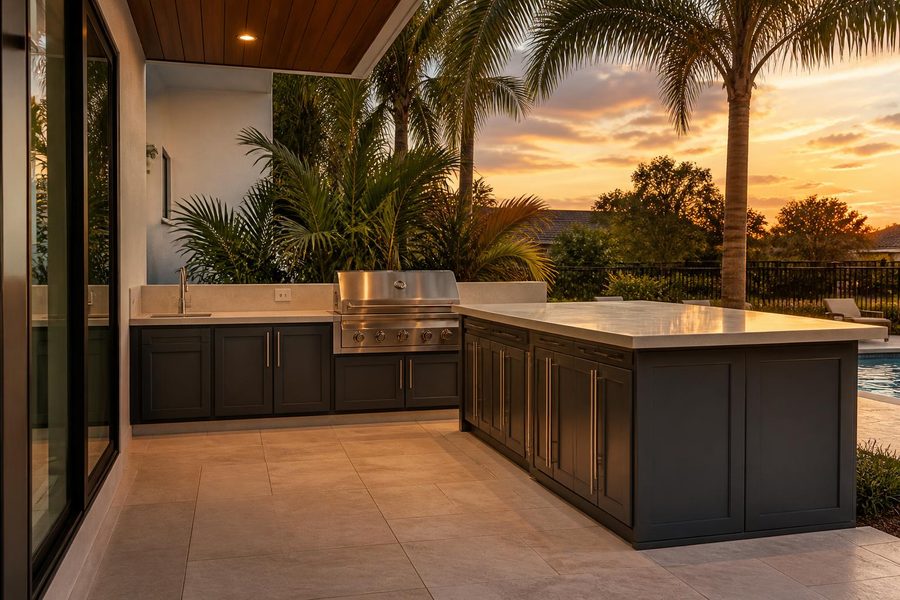
Outdoor Kitchen Cabinets
Planning Outdoor Kitchen Cabinets for Holiday Hosting in Central Florida
Outdoor kitchen cabinets holiday hosting guide for Central Florida: storage, serving counter space, and traffic flow tips.


Installing outdoor kitchen cabinets is a different process than setting up an indoor kitchen. The foundation, drainage, ventilation, and weather exposure all factor into how your cabinets are mounted and connected. Whether you are handling the install yourself or hiring a contractor in the Orlando area, understanding the installation process helps you avoid costly mistakes and keep your project on schedule.
At Casual Kitchens, we supply marine-grade HDPE polymer cabinets that simplify installation because the material does not require the same protective measures as wood or metal. This guide walks through every stage of a typical outdoor kitchen cabinet install in Central Florida.
Outdoor kitchen cabinets need a level, stable surface. In most Orlando installations, this means one of three foundation types:
Before cabinets arrive, make sure your plumbing and electrical rough-ins are complete:
Have exact dimensions and cutout requirements for every appliance before ordering cabinets. Grill widths, drop-in cooler dimensions, and refrigerator clearance specifications determine the cabinet openings. Getting this wrong means modification costs or reordering.

Place all cabinet boxes in position without securing them. Verify that:
Even on a concrete slab, minor variations are normal. Use composite or stainless steel shims (not wood — it rots) to level each cabinet. Check with a 4-foot level across the front, back, and side-to-side. Cabinets that are not level will have doors that hang crooked and drawers that do not close properly.
Clamp adjacent cabinets together and fasten them with stainless steel screws through the side panels. Standard practice is two screws per joint — one near the top and one near the bottom. HDPE polymer cabinets drill cleanly without splitting, unlike wood that can crack near edges.
In Florida, outdoor kitchens need to resist wind loads. Anchor base cabinets to the concrete slab using stainless steel concrete anchors or L-brackets. This is especially important in Orlando and surrounding areas where summer storms and occasional hurricanes produce high winds.
Drop in appliances, connect gas and water lines (licensed professionals for both), and test all connections before adding countertops. It is much easier to fix a gas leak or adjust a drain before a 300-pound granite slab is sitting on top.
Countertops are templated after cabinets are set and leveled. The fabricator will visit your site, take precise measurements including all cutouts, and return with the finished piece. Typical turnaround for granite or quartz countertops in the Orlando area is 7 to 14 days after templating.
Connect all appliances, test the gas grill ignition, run water through the sink to check for leaks, and verify that electrical outlets are functioning properly. Adjust door hinges and drawer slides as needed for smooth operation.
HDPE polymer cabinets are more DIY-friendly than masonry or steel-frame outdoor kitchens because they are lightweight, modular, and do not require welding or mortaring. A handy homeowner with basic tools can handle the cabinet assembly and placement.
However, we strongly recommend licensed professionals for:
For a straightforward HDPE cabinet installation on an existing slab with utilities already roughed in, expect 1 to 2 days for cabinet placement, securing, and appliance drops. Countertop templating and installation add another 1 to 3 weeks depending on your fabricator’s schedule.
A complete project from foundation pour through final testing typically takes 3 to 6 weeks, with the biggest variable being countertop fabrication lead time.
Whether you are doing the install yourself or coordinating with a contractor, our team at Casual Kitchens can provide detailed cabinet specs, recommended installer referrals in the Orlando area, and guidance on layout-specific installation considerations. Browse our full cabinet catalog, check our project gallery for layout inspiration, or contact us directly.
Call 407-887-0035 to discuss your installation project. We serve Orlando, Winter Park, Lake Mary, Kissimmee, Sanford, and all of Central Florida.
Outdoor kitchen cabinets holiday hosting guide for Central Florida: storage, serving counter space, and traffic flow tips.
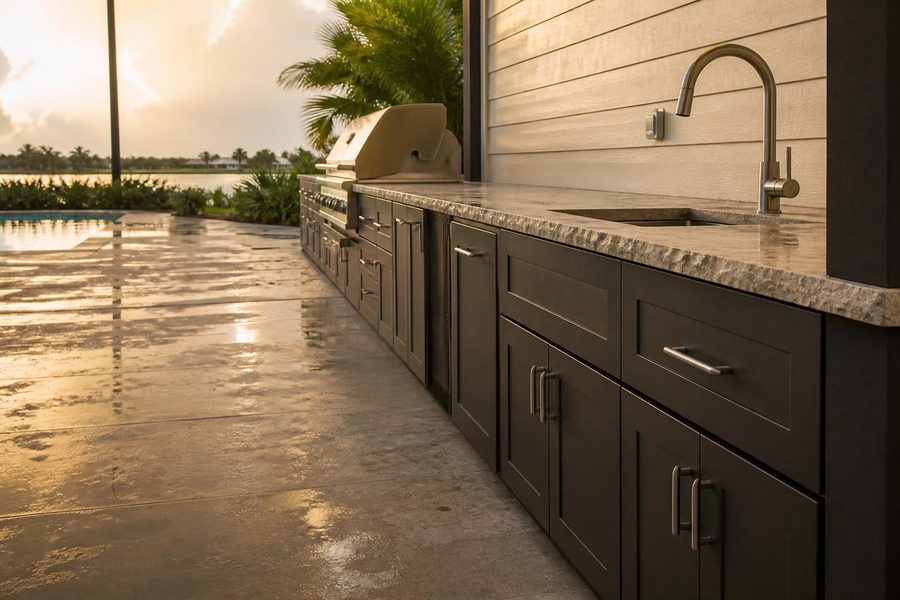
Outdoor kitchen cabinet drainage planning: learn how patio slope, raised bases, and runoff keep outdoor kitchen cabinets dry and long-lasting in Central Florida rain.
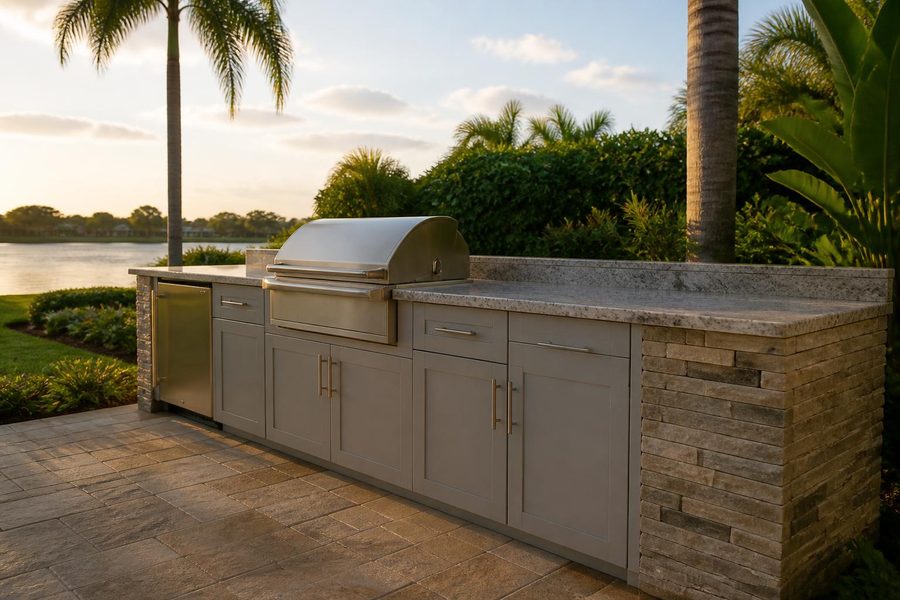
Outdoor kitchen cabinets Lake Mary homeowners can plan around: lanai, patio, and lakeside layouts with humidity and material tips.