Outdoor Kitchen Cabinets
Planning Outdoor Kitchen Cabinets for Holiday Hosting in Central Florida
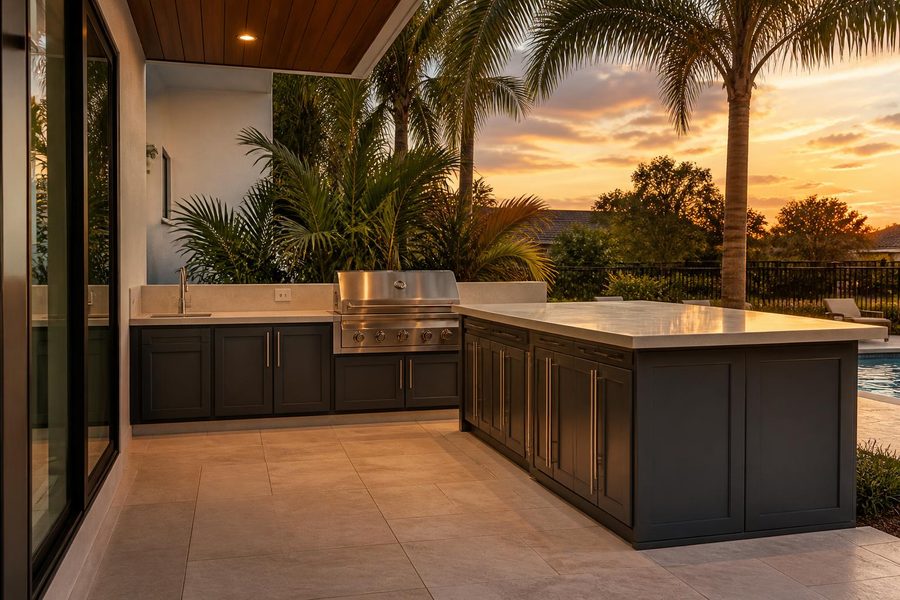
Outdoor kitchen cabinets holiday hosting guide for Central Florida: storage, serving counter space, and traffic flow tips.


Cabinet pulls, hinges, latches, and drawer slides do a lot of work in an outdoor kitchen. In Central Florida, humidity, rain splash, cleaning chemicals, and occasional salt air can make weak plated hardware pit, bind, or discolor long before the cabinet boxes have reached the end of their service life.
Casual Kitchens Outdoor Cabinets helps Orlando-area homeowners, builders, and designers choose cabinet layouts that are built for outdoor use from the cabinet box down to the smallest fastener. Hardware should be specified early because it affects door swing, drawer feel, cleaning access, and the finished look of the entire run.

For exposed or semi-exposed kitchens, stainless steel is usually the safest starting point. Grade 304 stainless can work well for many covered Orlando patios, while 316 stainless is worth discussing for coastal homes, waterfront properties, or projects that see more salt exposure. The goal is not just a shiny pull on install day. The goal is a door, drawer, hinge, or latch that still operates smoothly after months of heat and moisture.
Avoid treating indoor cabinet hardware as interchangeable with outdoor hardware. Thin plated steel, low-grade screws, and decorative hinges that are not intended for exterior use can corrode quickly. Once corrosion starts around a hinge cup, screw head, or pull base, the damage can spread into the surrounding finish and make a premium cabinet run look neglected.
Humidity affects more than appearance. Doors and drawers are opened with damp hands, grill tools are put away after use, and outdoor kitchens are often rinsed or wiped down after pollen season, pool use, or a weekend cookout. Hardware that looks acceptable indoors may not tolerate that routine outside.
Salt air raises the standard again. Even if the home is not directly on the beach, salty moisture can accelerate corrosion on exposed fasteners and untreated metal edges. That is why we look at the whole site: roof coverage, screen enclosure, pool proximity, prevailing rain, cleaning habits, and whether the cabinets are part of a fully open patio or a protected lanai.
A grill base, trash pull-out, sink cabinet, drawer stack, and appliance cabinet do not all need the same hardware decision. Heavy-use drawers need slides and pulls that feel solid when loaded. Trash and cleaning supply cabinets need hardware that can handle frequent opening with damp hands. Doors near a grill or sink should be easy to grip without forcing the homeowner to touch the cabinet face every time.
That planning also keeps the layout cleaner. A long cabinet run can look busy if every door has an oversized pull, but it can feel unfinished if hardware is too small for the scale of the appliances and countertop. The best choice usually balances corrosion resistance, grip comfort, and visual rhythm.

Outdoor cabinet hardware should make maintenance easier, not harder. Smooth pulls with fewer dirt-catching edges are usually easier to wipe down. Hinges and slides should be accessible enough that a service technician can inspect them without taking apart the entire cabinet run. If a project includes a sink, ice maker, refrigerator, or trash cabinet, the surrounding hardware should be ready for more frequent moisture exposure.
For moisture and ventilation context, it can help to review outside references such as the EPA moisture guidance. Code and placement questions should also be checked against the appropriate local requirements, including the Florida Building Code reference when utilities, drainage, or appliance placement are part of the project.
Hardware decisions become harder once the appliances, door swings, and countertop overhangs are locked in. A handle that looks good on a sample door can become awkward if it interferes with an adjacent appliance, a corner, or a pull-out accessory. Early planning gives the team time to coordinate the cabinet run, confirm clearances, and make sure the final installation feels intentional.
If you want to compare examples, start with the project gallery, review the outdoor cabinet catalog, and then look at the Orlando service area page for local context. Bringing measurements, appliance plans, or patio photos to a planning conversation makes the hardware discussion much more useful.
Outdoor-rated stainless hardware is usually the safest baseline. Covered patios may have more flexibility, while coastal or highly exposed projects should consider higher corrosion resistance and manufacturer-approved components.
They should coordinate with the appliance finish, but they do not have to match exactly. Durability, grip comfort, and corrosion resistance should come before a perfect decorative match.
Yes. Weak hinges, slides, screws, and pulls can create service problems even when the cabinet boxes are still sound. Good hardware protects both function and appearance.
Ready to plan the next step? Call (407) 887-0035, email Sales@Casual-Kitchens.com, or request a consultation through our contact page. Casual Kitchens Outdoor Cabinets helps Central Florida homeowners compare outdoor cabinet layouts, finishes, and hardware details before they order.
Outdoor kitchen cabinets holiday hosting guide for Central Florida: storage, serving counter space, and traffic flow tips.
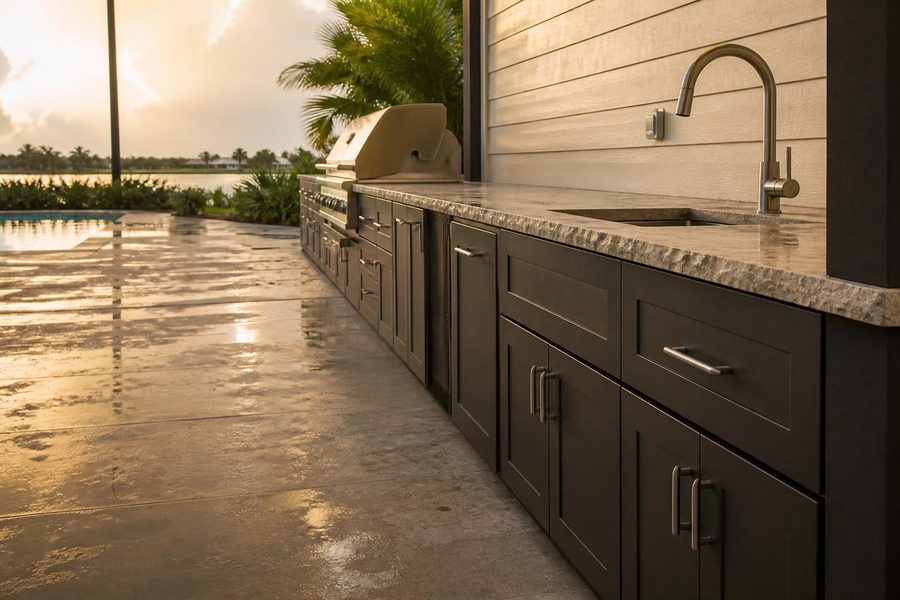
Outdoor kitchen cabinet drainage planning: learn how patio slope, raised bases, and runoff keep outdoor kitchen cabinets dry and long-lasting in Central Florida rain.
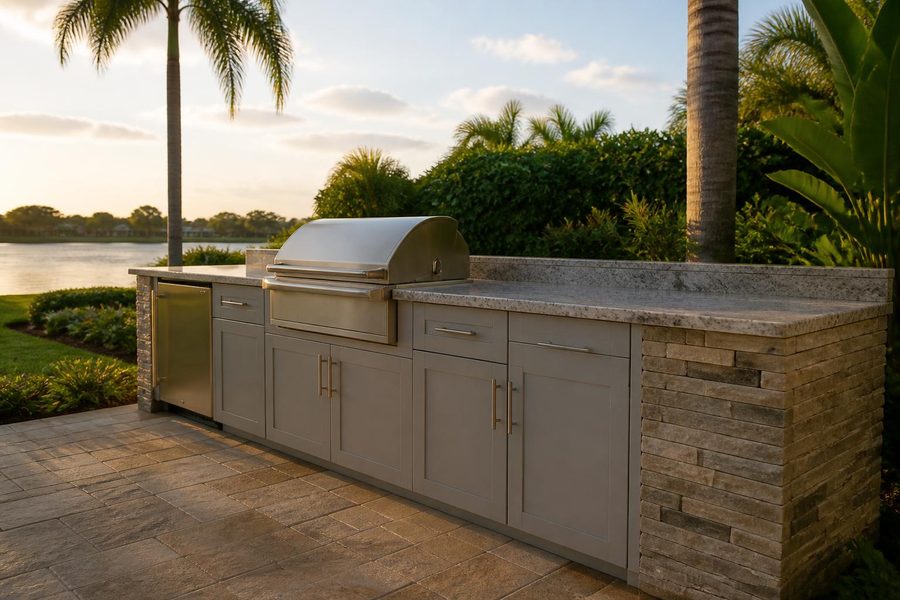
Outdoor kitchen cabinets Lake Mary homeowners can plan around: lanai, patio, and lakeside layouts with humidity and material tips.