Outdoor Kitchen Cabinets
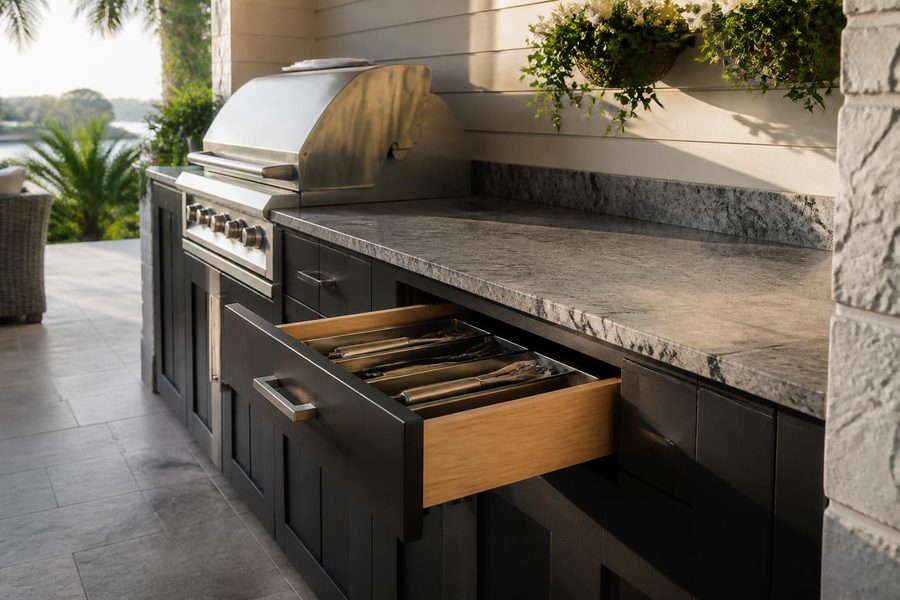
Grill Tool and Utensil Storage Ideas for Outdoor Kitchen Cabinets
Grill tool storage outdoor kitchen cabinets can offer: drawer, divider, and placement tips built for Florida humidity.


The material you choose for your outdoor kitchen cabinets affects everything about the finished project — how it looks, how it weathers, how long the design stays fresh, and how much maintenance you sign up for. If you are comparing options for a backyard project in Orlando or Central Florida, this guide puts the most common materials side by side so you can make a confident design decision.
At Casual Kitchens, we specialize in marine-grade HDPE polymer cabinets because they perform well in Florida’s demanding outdoor conditions. But we believe homeowners should understand all the options before choosing, so here is an honest breakdown.
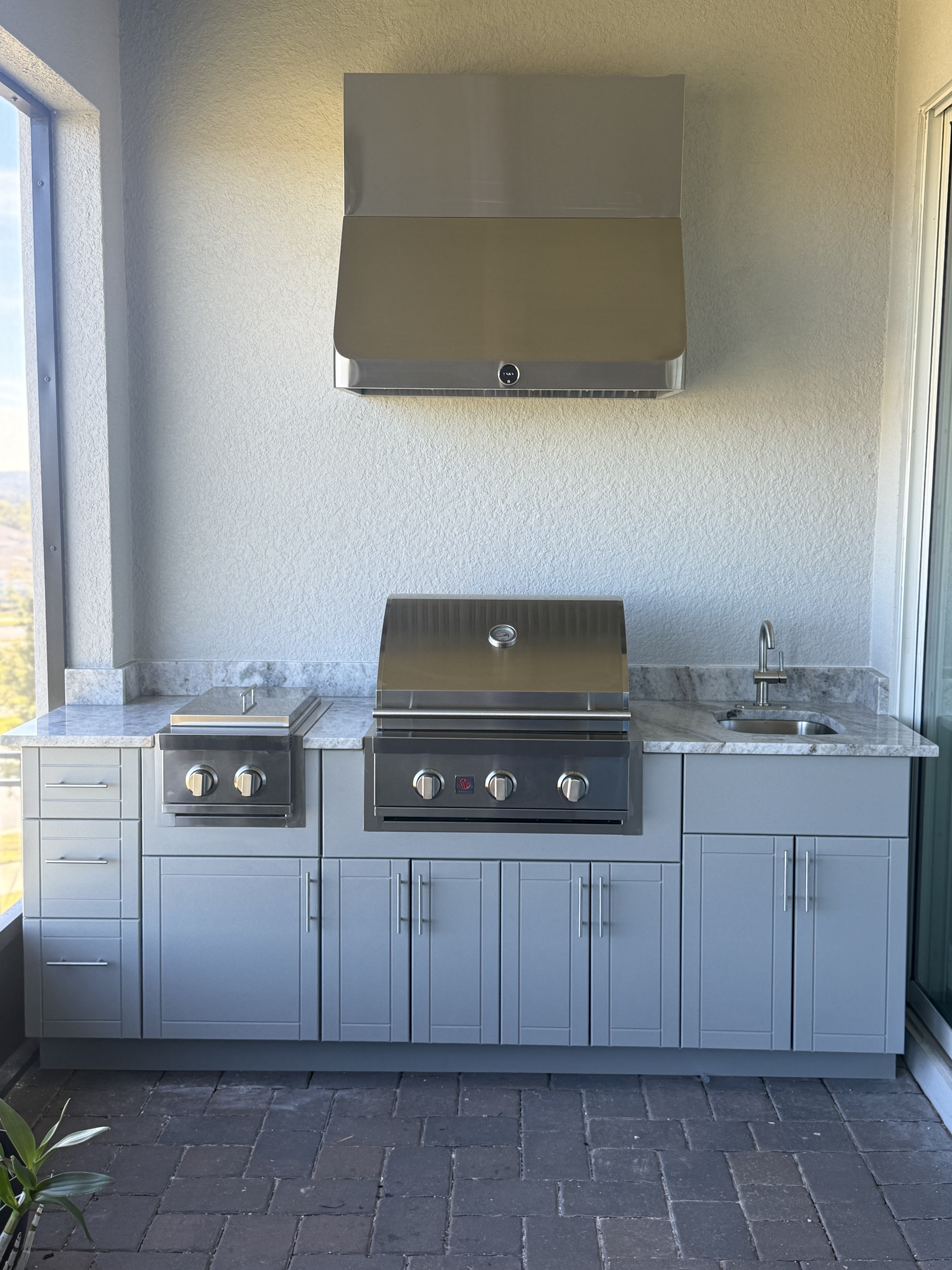
HDPE polymer cabinets come in a range of solid colors — whites, grays, charcoals, tans, and coastal blues — that complement popular Florida exterior palettes. The finish is matte and consistent, giving a clean, modern look that pairs naturally with stone countertops, pavers, and pool coping. If you want a warm, furniture-like feel for your outdoor kitchen design, polymer cabinets deliver without looking industrial.
Stainless steel has a distinctive commercial-kitchen aesthetic. It works well in modern, minimalist designs but can feel cold or utilitarian in a backyard entertaining space. Fingerprints, water spots, and heat discoloration are visible on stainless surfaces, which affects the polished look over time.
In the Orlando climate — high humidity, afternoon thunderstorms, strong UV, and occasional salt air from the coast — HDPE polymer is highly resistant to common weather problems. It is designed not to rust, and it is less prone to swelling, delamination, and surface-coating fade because the color runs through the material.
Stainless steel resists rust in most conditions but is not immune. Lower-grade stainless (304 vs. marine-grade 316) can develop surface corrosion in humid, salty environments. Heat discoloration near the grill is common and permanent.
HDPE typically cleans with soap and water. Stainless steel may need specialized cleaners, directional polishing, and more frequent attention to look its best.

Wood outdoor cabinets — typically teak, cypress, or marine-grade plywood — offer a natural, warm aesthetic that many homeowners find appealing in a tropical backyard setting. Fresh wood cabinets look beautiful. The problem is keeping them looking that way.
HDPE polymer offers a wider range of consistent colors without the grain variation, knots, or color shifts that come with natural wood. For homeowners who want a specific color palette that stays predictable year after year, polymer is the more reliable design choice.
Wood absorbs moisture. During Florida’s high-humidity months, even marine-grade plywood can swell, contract, and eventually degrade unless it is carefully maintained. Teak is the most resilient wood but turns silver-gray without regular oiling and still develops checks and splits over time.
HDPE has very low moisture absorption. It is less likely than wood to swell in the rainy season, shrink in dry periods, or develop surface checking in fluctuating conditions. Proper installation still matters for door and drawer alignment.
Wood outdoor cabinets need sealing or oiling 1 to 2 times per year, periodic sanding of weathered surfaces, and eventual refinishing. Over 10 years, wood maintenance costs often exceed the initial cabinet investment. HDPE usually needs little beyond occasional cleaning.
Concrete block outdoor kitchens with stucco finish are common in Florida because they match many home exteriors. They offer a built-in, permanent look. However, design flexibility is limited — changing the layout means demolition, and stucco develops cracks and staining over time that require patching and repainting.
HDPE polymer cabinets offer a modular design approach. You can rearrange, add, or reconfigure without structural demolition. Colors and door styles can be updated by replacing individual panels rather than re-stuccoing an entire island.
Stucco is durable but porous. Florida rain drives moisture into stucco surfaces, leading to efflorescence (white mineral deposits), mildew growth in the textured surface, and eventual cracking from thermal expansion. The steel reinforcement inside concrete block can rust and cause spalling.
HDPE cabinets have no pores, no internal metal to corrode, and no surface texture that traps mold or mildew.
Concrete block kitchens are permanent structures. Moving them or changing the footprint is a construction project. HDPE cabinets can be unbolted, repositioned, or supplemented with additional units as your outdoor living needs evolve.
Here is how the four most common outdoor kitchen cabinet materials compare across the factors that matter most for Florida designs:
Consider these questions when deciding:
For homeowners comparing polymer and recycled material claims, the EPA recycling resources are a useful starting point for understanding common recycling terminology before you compare product specifications.
HDPE polymer is usually the lowest-maintenance choice because it does not need sealing, staining, polishing, or repainting. A mild soap-and-water cleaning routine is typically enough for normal outdoor use.
Not always. Stainless steel can work well for a modern look, but grade, finish, salt exposure, and cleaning habits matter. In humid Florida settings, polymer cabinets can be easier to maintain and warmer-looking in residential backyard designs.
Yes. One advantage of modular HDPE cabinetry is that individual units can often be added, moved, or reconfigured more easily than a concrete block or stucco island.
Descriptions only go so far. The best way to compare outdoor kitchen cabinet materials is to see and feel them. Contact Casual Kitchens or call 407-887-0035 to discuss material options for your project. We serve homeowners across Orlando, Winter Park, Lake Mary, Kissimmee, and Sanford.
Casual Kitchens (legally Casual Kitchens Outdoor Cabinets) — marine-grade HDPE outdoor kitchen cabinets designed for Florida living.
Grill tool storage outdoor kitchen cabinets can offer: drawer, divider, and placement tips built for Florida humidity.
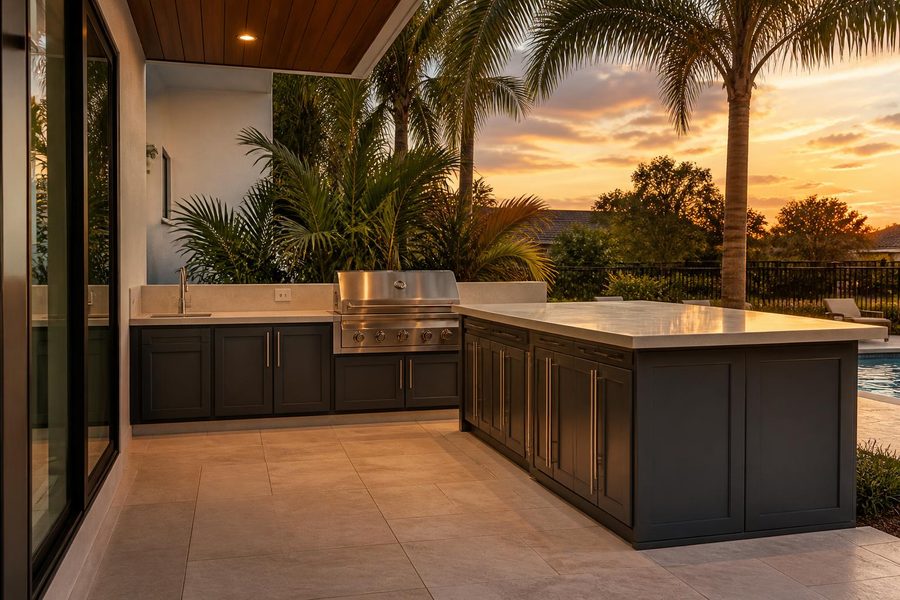
Outdoor kitchen cabinets holiday hosting guide for Central Florida: storage, serving counter space, and traffic flow tips.
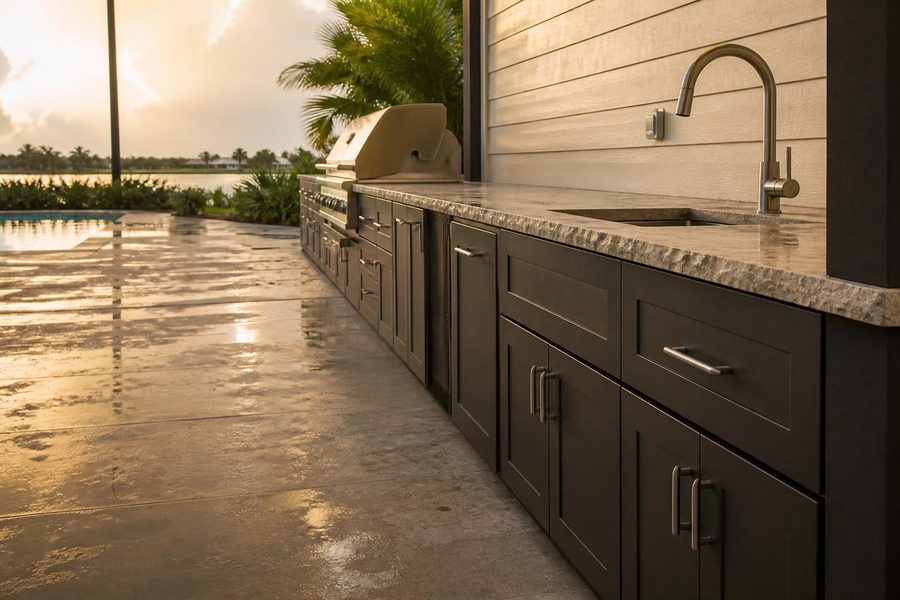
Outdoor kitchen cabinet drainage planning: learn how patio slope, raised bases, and runoff keep outdoor kitchen cabinets dry and long-lasting in Central Florida rain.