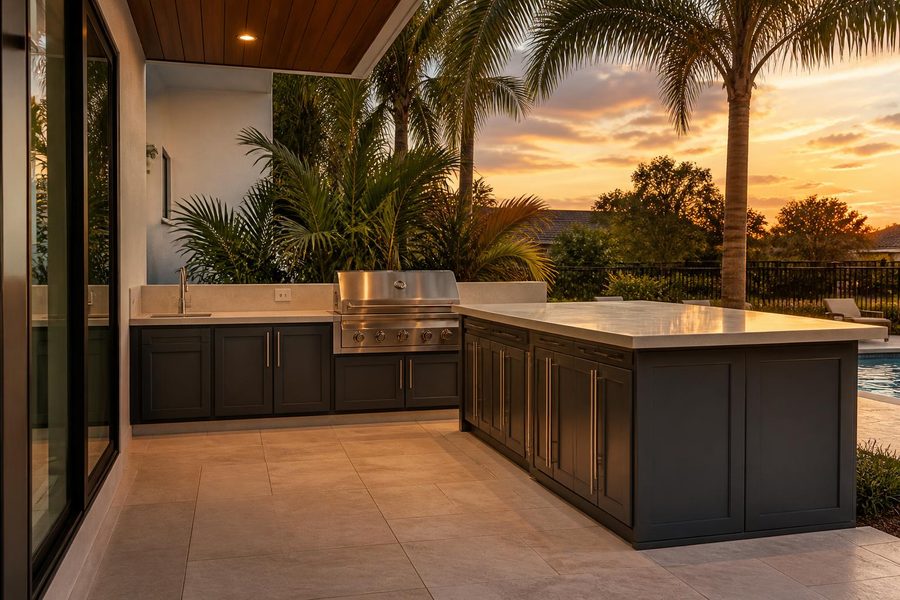
Outdoor Kitchen Cabinets
Planning Outdoor Kitchen Cabinets for Holiday Hosting in Central Florida
Outdoor kitchen cabinets holiday hosting guide for Central Florida: storage, serving counter space, and traffic flow tips.


Comparing outdoor cabinet materials before you buy in Orlando helps you make a smarter decision before cabinets, countertops, and appliances get locked in. Material comparison is where many homeowners either protect the project or accidentally weaken it. At Casual Kitchens Outdoor Cabinets, our Orlando team helps homeowners, designers, and builders compare layouts that feel intentional outdoors instead of improvised after the patio is already finished.
Comparing outdoor cabinet materials early helps homeowners weigh long-term durability, finish options, maintenance expectations, and how the layout needs to function outdoors. The right decision usually comes down to workflow, storage, durability, and how the kitchen will really be used on a normal weekend in Orlando.

Material comparison is where many homeowners either protect the project or accidentally weaken it. Homeowners usually notice the issue when they start comparing appliance sizes, prep space, and the amount of storage they actually need for entertaining. The stronger layout decision is the one that makes the cabinet run easier to use long after install day.
That is why our team looks at the cabinet sequence, not just one isolated product. A grill, sink, trash cabinet, prep zone, and serving area all compete for the same linear feet. When that sequence is planned well, the whole patio feels calmer and more expensive.
Most outdoor cabinet projects in Central Florida come down to a few core construction approaches, and each one reads differently once it lives outside year-round. Marine-grade polymer and HDPE-style boxes are popular because they shrug off rain, humidity, and pool splash without rotting or rusting, and they wipe clean easily after a cookout. Powder-coated aluminum frames bring a clean, modern look and stay light, though the finish quality and the hardware behind it are what really separate a long-lasting cabinet from one that looks tired in a couple of seasons. Stainless steel offers a professional, restaurant-style feel, but grade and gauge matter a great deal near a chlorinated pool or in salt-influenced air, where lower grades can spot or discolor.
Stone, stucco, or block enclosures with weatherproof doors are another route many Orlando homeowners consider when they want the kitchen to match the house masonry or a screened lanai. These can look beautifully permanent, but they trade flexibility for that solidity: the footprint is fixed, and any future change means real construction rather than swapping a unit. Comparing these families side by side—rather than falling for whichever one a single showroom happens to push—keeps the conversation grounded in how your patio actually gets used.
The honest takeaway is that no single material wins every category. The right answer depends on your sun exposure, how close the kitchen sits to a pool, whether the space is covered or fully open, and how much you value being able to reconfigure later. Weighing those factors together is exactly the comparison that protects the budget.
Most outdoor kitchens perform better when the planning details are settled before the countertop template and appliance order are finalized. In Florida, those details also need to account for heat, rain, humidity, and the way the backyard is cleaned and maintained through the year.
We recommend checking manufacturer specifications, rough utility locations, and the best-use sequence for prep, cooking, serving, and cleanup early. That keeps the layout grounded in function instead of forcing last-minute filler panels or awkward gaps around the appliances.
Backyard kitchens in Orlando have to be practical, but they also need to belong visually to the house and patio. Finish direction, cabinet color, hardware, and the surrounding hardscape all play into whether the project looks intentional from the pool deck, the lanai, or the back door.
For that reason, we usually encourage homeowners to compare project photos, real finish samples, and layout sketches together. It is also worth reviewing outside guidance like EPA moisture guidance and the Florida Building Code reference when the project needs stronger context for moisture, ventilation, or placement decisions.
If you want to compare how similar layouts read in real backyards, browse our project gallery and then move to the outdoor cabinet catalog to see how the storage pieces translate into an actual cabinet run.
Outdoor kitchens start feeling generic when every decision is based on appearance first and workflow second. That usually shows up in cramped prep areas, weak storage planning, or a cabinet run that leaves no obvious place for cleanup and service items.
A stronger project usually comes from editing the plan. Keep the main use case clear, protect the prep space, and let the cabinets support the way the household entertains. That is the difference between a kitchen that photographs well and one that actually performs well on a busy weekend.
Comparing materials is not only about install day; it is about the next several years of upkeep. A polymer cabinet run tends to ask very little—an occasional wipe-down and a check of the hinges and drawer glides is usually enough to keep it looking new. Powder-coated aluminum holds up well too, but it rewards prompt attention: rinsing off pool chemicals and salt residue keeps the finish from dulling, and catching a chip early prevents a small cosmetic flaw from spreading. Stainless steel looks fantastic but shows fingerprints, water spots, and surface tea-staining more readily, so households that want a flawless look should be honest about how much wiping they are willing to do.
Hardware is the quiet factor that decides how a kitchen ages. Hinges, soft-close glides, gas-strut lids, and fasteners all live in the same humid, sun-baked environment as the cabinet box, and lower-grade components are usually the first thing to fail. When you compare options, ask what the moving parts are made of and how they are protected, not just what the door panel is. A cabinet that opens smoothly after three rainy seasons is worth far more than one that simply looked good on the showroom floor.
Thinking through maintenance up front also helps you place the kitchen sensibly. A little overhead cover, a sensible distance from heavy splash zones, and a finish chosen for your specific exposure all reduce the upkeep burden, which is one more reason the material conversation and the layout conversation really belong together.
Whether you are planning a compact patio upgrade or a larger backyard kitchen, the easiest next step is to compare the cabinet sequence against your real space. That means checking where prep happens, where cleanup happens, and what should stay closest to the grill. It also means looking honestly at how much storage you need for trays, tools, cleaners, and serving pieces.
If you are still in research mode, start with our Orlando service area page for local context, then review cabinet options and request a planning conversation through the contact page. That combination gives you better questions to bring into a showroom or layout review.
Look at moisture resistance, finish stability, maintenance expectations, construction details, and how the material supports your layout.
Florida weather exposes cabinet weaknesses quickly, so durability and moisture resistance have to be part of the first decision.
No. Material, layout, appliance planning, and finish direction all affect each other in a real outdoor kitchen project.
Ready to compare outdoor kitchen cabinet options? Call (407) 887-0035, email Sales@Casual-Kitchens.com, or request a consultation through our contact page. Casual Kitchens Outdoor Cabinets helps homeowners across Central Florida compare cabinet layouts, finishes, and real storage needs before they order.
Outdoor kitchen cabinets holiday hosting guide for Central Florida: storage, serving counter space, and traffic flow tips.
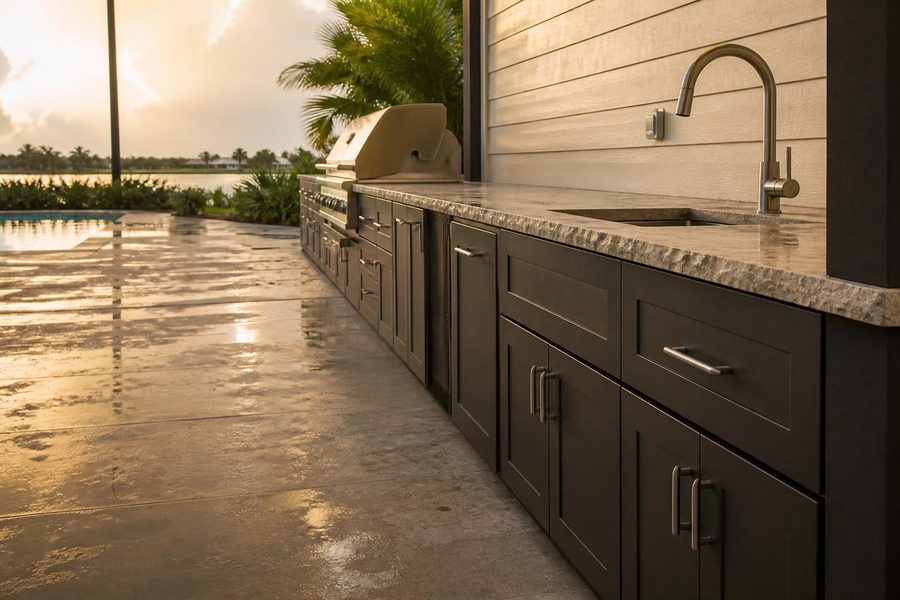
Outdoor kitchen cabinet drainage planning: learn how patio slope, raised bases, and runoff keep outdoor kitchen cabinets dry and long-lasting in Central Florida rain.
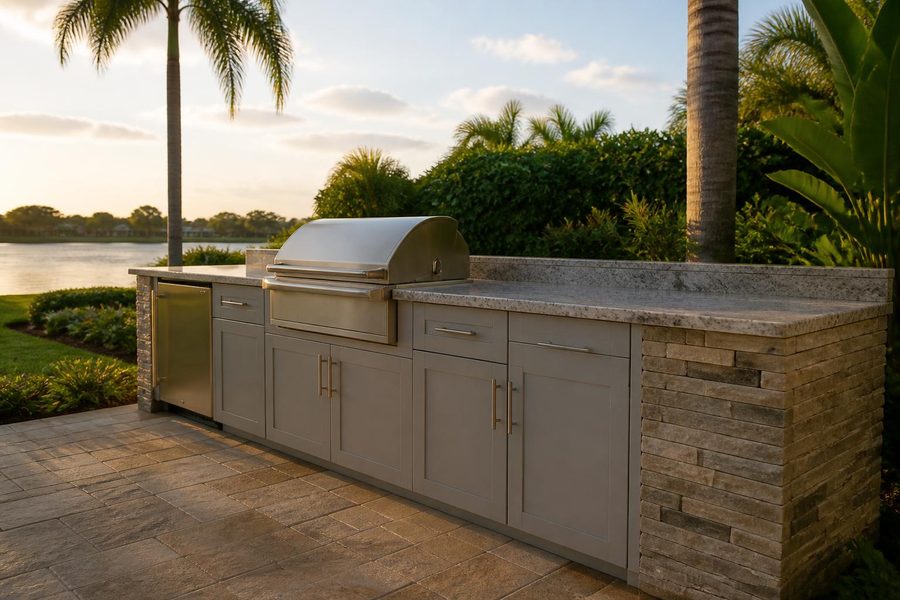
Outdoor kitchen cabinets Lake Mary homeowners can plan around: lanai, patio, and lakeside layouts with humidity and material tips.