Design And Inspiration
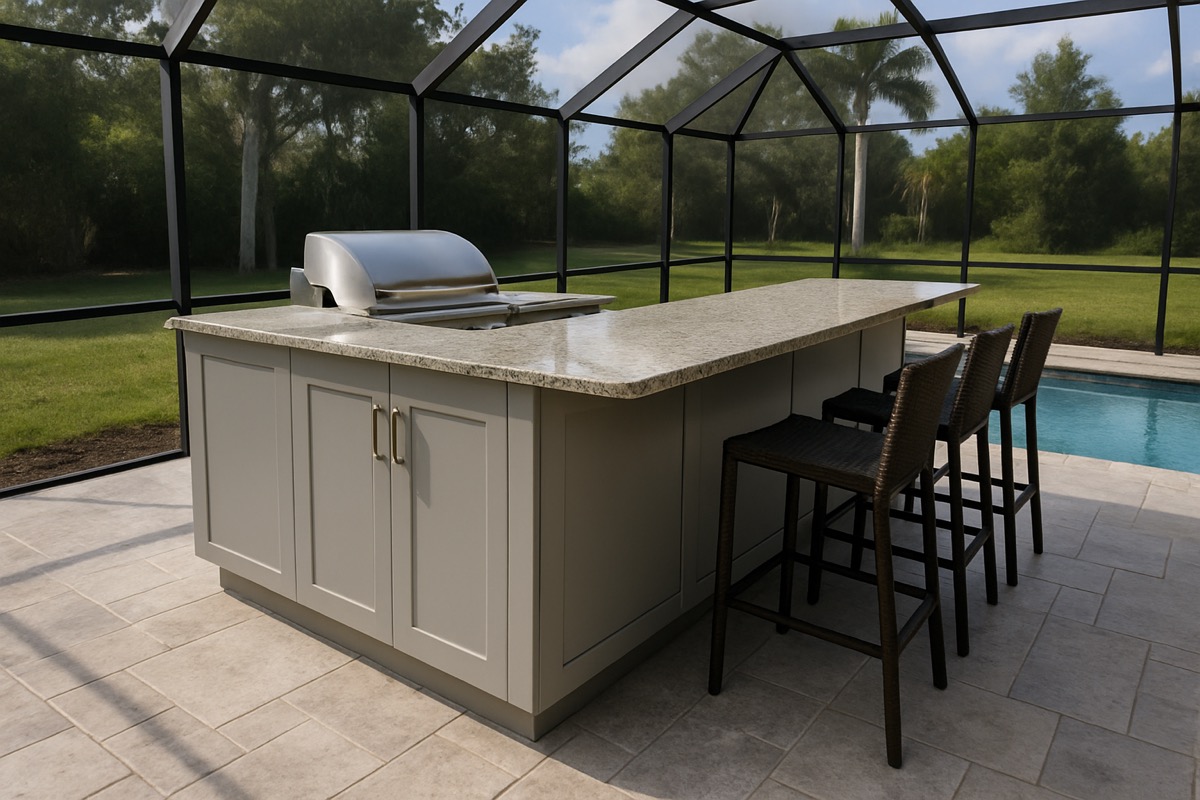
Outdoor Kitchen Island vs Straight-Run Cabinet Layouts for Orlando Patios
An island or a straight run against the wall? The right choice depends on your patio, your traffic, and how you entertain.

Marine-grade polymer cabinets give you a base that ignores rain, sun, and salt air. To get the full benefit, the countertop on top of them needs to be just as weather-ready. Not every surface that works indoors holds up outdoors in Florida, so here is how we guide homeowners through the most common choices, including the one material people are surprised to learn does not belong outside.
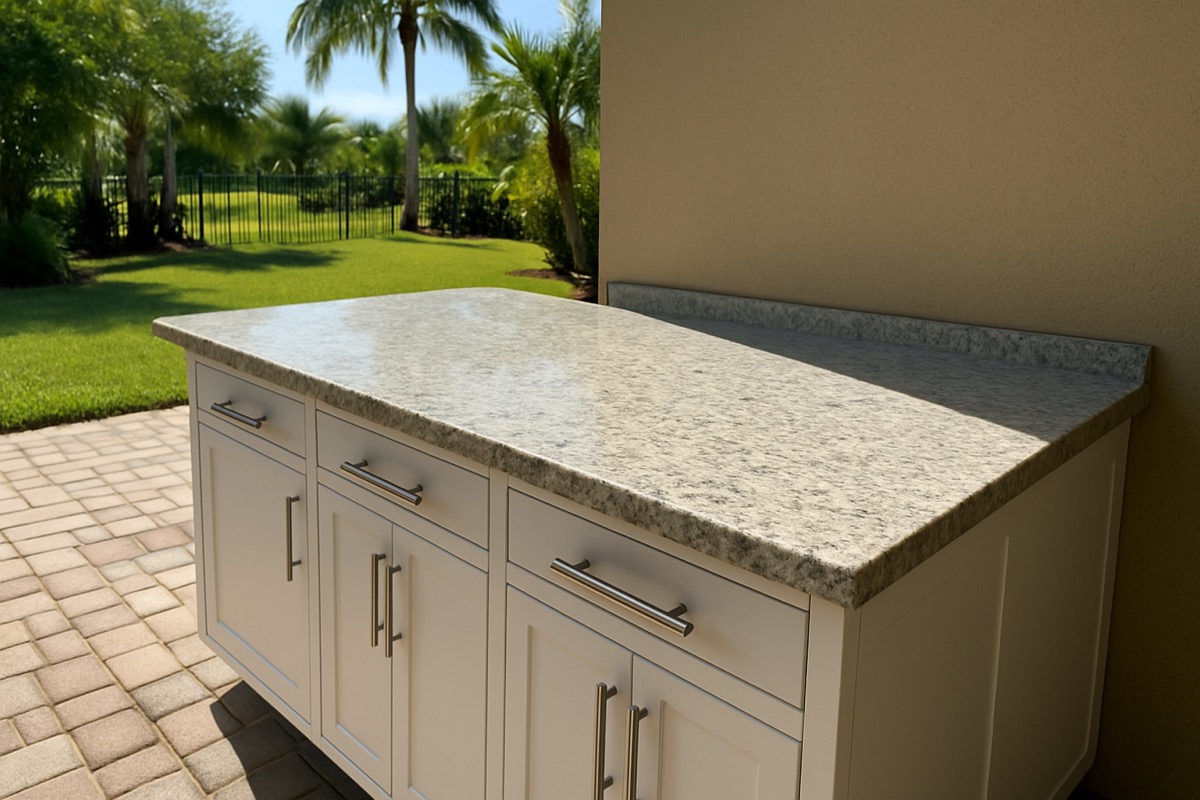
Granite remains the most popular outdoor countertop for good reason. It is a natural stone that tolerates heat, resists scratches, and holds up to UV without fading. Sealed properly and resealed periodically, granite handles Florida weather for years. Darker granites can get hot in direct afternoon sun, so for uncovered patios we often steer homeowners toward lighter slabs that stay cooler to the touch. Granite also offers an enormous range of patterns and colors, which makes it easy to coordinate with both the cabinets and the home.
Quartzite, a natural stone often confused with engineered quartz, is an excellent outdoor performer. It is hard, heat-tolerant, and UV-stable, and it tends to come in lighter, brighter tones that suit Florida patios. One note that trips people up: true quartzite is the outdoor pick, while engineered quartz, the manmade slab common in indoor kitchens, can discolor under constant UV and is not a great outdoor choice. The names sound alike, so we make sure clients know the difference before they fall in love with a sample at the showroom.
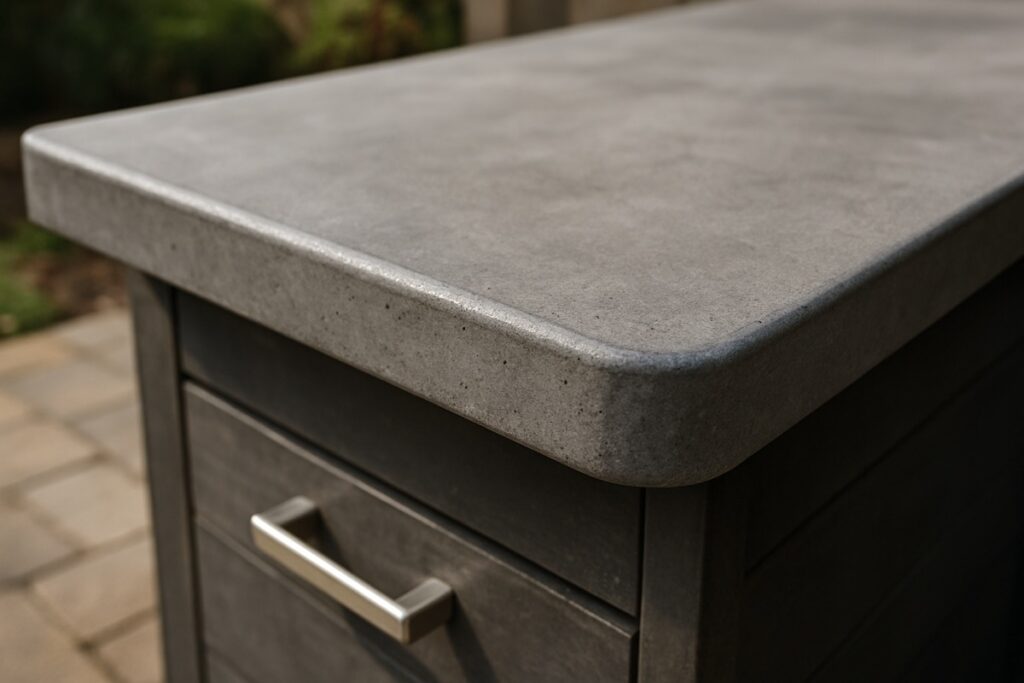
Poured concrete countertops give a clean, modern look and can be cast in custom shapes to fit an island or curved run. Sealed concrete handles the outdoors well and pairs beautifully with slab-front polymer cabinets for a contemporary kitchen. It does need resealing to stay stain-resistant, and it can develop fine hairline character over time, which some homeowners love as part of the material’s charm and others prefer to avoid. If a one-of-a-kind, architectural look appeals to you, concrete is worth considering.
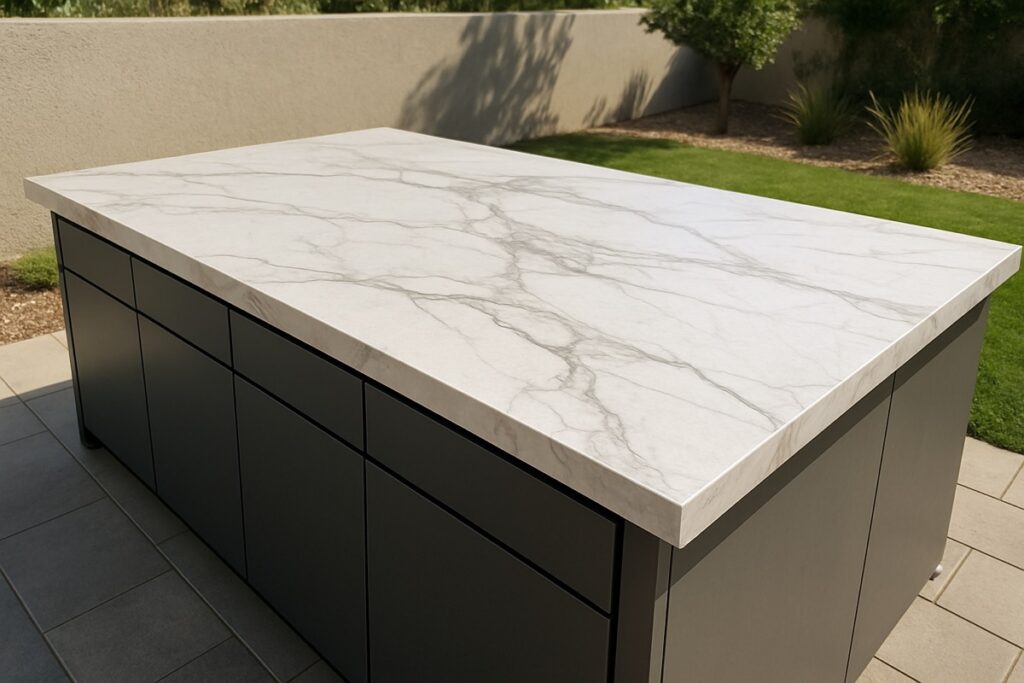
Large-format porcelain slabs have become a strong outdoor option. Porcelain is highly UV-stable, does not need sealing, resists stains, and shrugs off heat. It comes in surfaces that mimic stone or concrete, so you can get a high-end look with very little maintenance. The main consideration is working with a fabricator experienced in porcelain, since the material is thinner and handled differently than stone. For homeowners who want the least possible upkeep, porcelain is hard to beat.
The slab is only part of the decision. The edge profile sets the style, with simple eased or square edges suiting modern slab cabinets and fuller profiles complementing shaker doors. If you want bar seating, plan the overhang into the countertop early, since adding it later is harder. Finish matters too: honed and leathered finishes hide water spots and fingerprints better than high polish, which is a real advantage on an outdoor surface that lives with pollen, rain, and constant use.
We steer homeowners away from engineered quartz, laminate, and most tile-with-grout surfaces for outdoor use. Engineered quartz can discolor under UV exposure, laminate fails in weather, and grout lines trap water and grow mildew in humid climates. With a weatherproof polymer base, it is worth choosing a top that matches its longevity rather than undercutting it with a material that will not last the same number of seasons.
The countertop and cabinets should be chosen together, not in isolation. A light stone top brightens a kitchen with darker cabinets, while a darker concrete or stone surface grounds light cabinets and hides everyday use. Think about the home behind the kitchen too, letting the countertop pick up a tone from the stucco, stone, or trim so the whole space reads as one design. Pull physical samples and set the countertop sample on top of the cabinet sample in real daylight before deciding, since showroom lighting flattens the contrast you will actually see on your patio. A few minutes with samples in hand prevents the most common regret, which is a pairing that looked great indoors and felt off outside.
Where your countertop sits relative to the Central Florida sun matters as much as the material itself. A surface under a covered lanai lives an easier life, shaded from the worst of the UV and the afternoon heat, which opens up more options and softer colors. A countertop on an open pool deck takes the full brunt of the sun for most of the day, and that changes the math. Dark stone absorbs heat and can become genuinely uncomfortable to set a hand or a plate on by mid-afternoon, so for fully exposed runs we steer homeowners toward lighter slabs that stay closer to air temperature. UV stability becomes non-negotiable too, which is exactly where engineered quartz falls down and natural quartzite, granite, and porcelain hold their color. The simple habit that prevents regret is to figure out how many hours of direct sun your countertop will actually get, then let that number narrow the field before you ever start choosing colors.
The sticker price of a slab is only part of the story; the upkeep it asks for over the years is the rest. Natural stones like granite and quartzite are sealed at install and benefit from periodic resealing to stay stain-resistant, a simple task but one worth knowing about so it does not surprise you. Concrete asks for the most attention, needing resealing to fend off stains and developing fine character lines over time that some homeowners prize and others would rather avoid. Porcelain sits at the opposite end, needing no sealing at all and shrugging off stains and UV, which is why it appeals to homeowners who want to cook and host without thinking about maintenance. None of these is difficult to live with, but the right choice depends partly on how much upkeep you are happy to do. We walk through the honest maintenance picture for each option so the surface you choose matches not just your budget and your look, but the amount of care you actually want to give it.
Once the color direction is clear, evaluate the details that affect daily use. Confirm the countertop leaves enough landing space beside the grill and sink, choose an edge profile that suits the cabinet style, and ask how the surface should be cleaned and maintained. Those practical checks keep a beautiful pairing from becoming a maintenance headache after installation.
Additional resource: For independent, lab-tested comparisons of countertop materials and how they hold up to stains, heat, and scratches, see Consumer Reports’ countertop reviews and buying guide.
Can I use indoor quartz outdoors? We do not recommend it. Engineered quartz can discolor under constant Florida sun. Choose natural quartzite or granite instead.
Which countertop needs the least maintenance? Porcelain, since it does not require sealing and resists stains and UV.
Do dark countertops get too hot? On uncovered patios in full sun, darker stone can get warm. Lighter slabs stay more comfortable to touch.
How do I plan for bar seating? Decide on the overhang before fabrication, since building it in later is difficult and more expensive.
See how different countertops look on our cabinets in the project gallery, explore the cabinet lineup, and reach out through our contact page or at (407) 887-0035 to plan a pairing that lasts in Orlando.
An island or a straight run against the wall? The right choice depends on your patio, your traffic, and how you entertain.
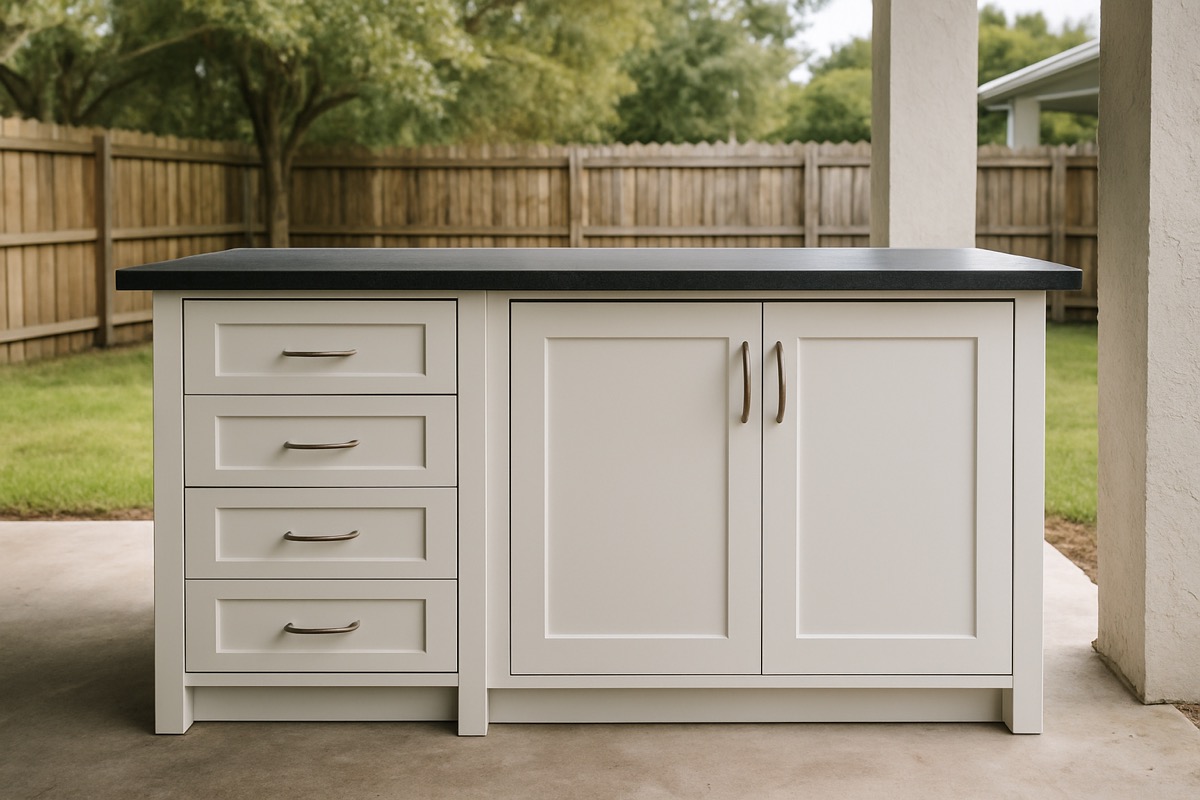
Drawers or doors? Both have a place in a well-planned outdoor kitchen. Here is how we help Orlando homeowners choose the right mix.
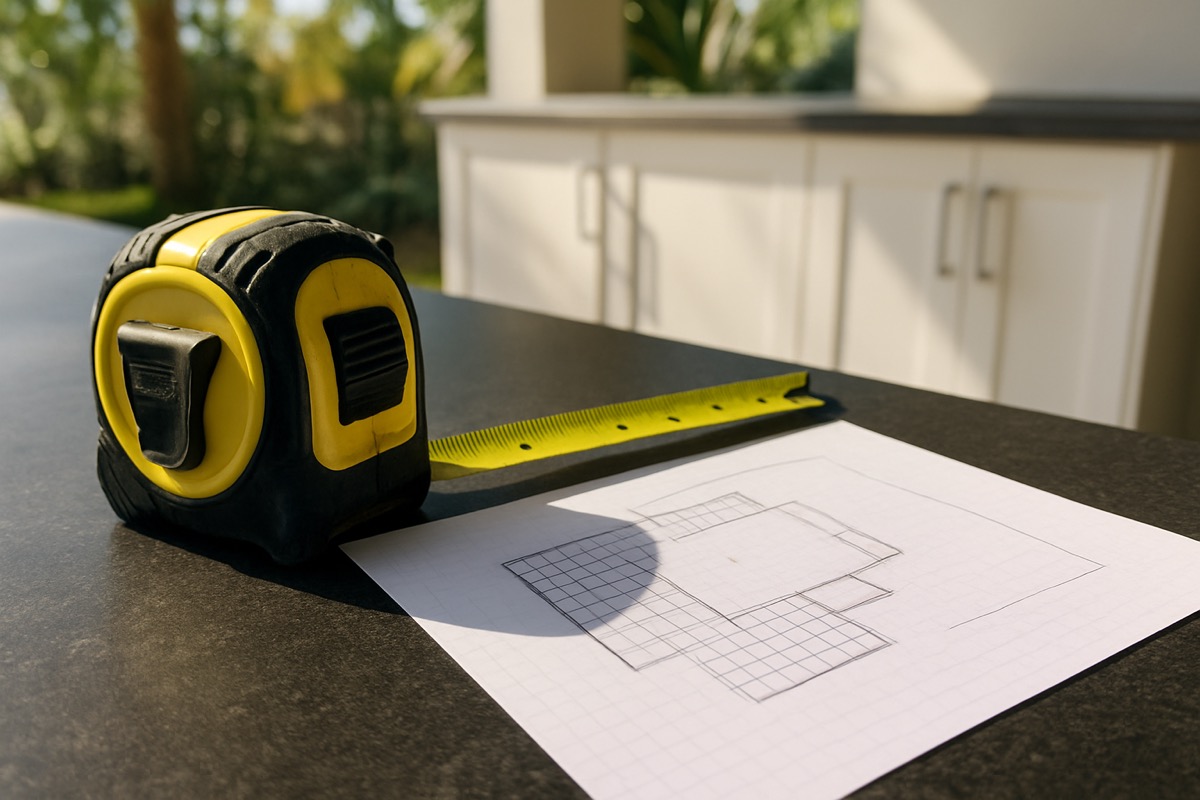
Before you order a single cabinet, measure the space the right way. Here is the exact process we walk Orlando homeowners through.