Outdoor Kitchen Cabinets
Grill Tool and Utensil Storage Ideas for Outdoor Kitchen Cabinets
Grill tool storage outdoor kitchen cabinets can offer: drawer, divider, and placement tips built for Florida humidity.

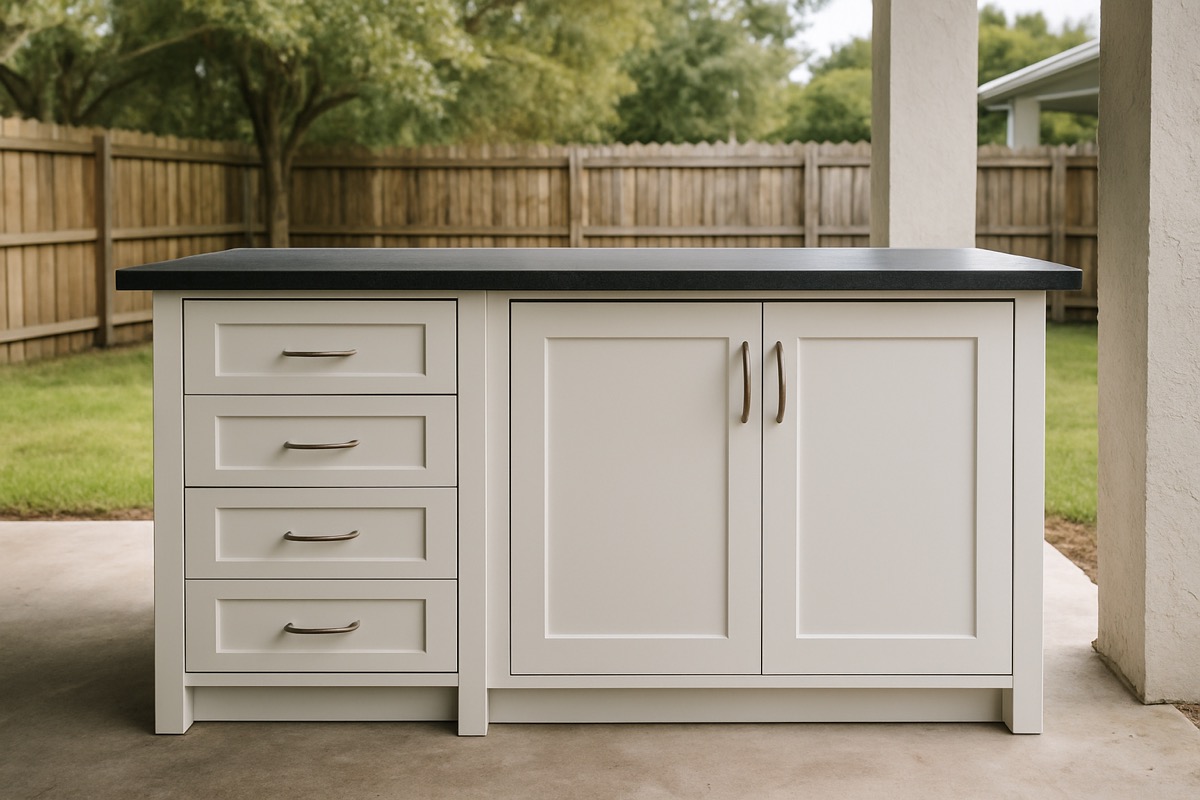
One of the first decisions in an outdoor kitchen layout is how much of your base storage should be drawers versus doors. Both are workhorses, and the best kitchens use a thoughtful mix rather than committing entirely to one. The right balance depends on what you store, how often you reach for it, and where each cabinet sits in your workflow. Below, we break down what each cabinet type does best, how to combine them, and the details that matter most once they live outdoors.
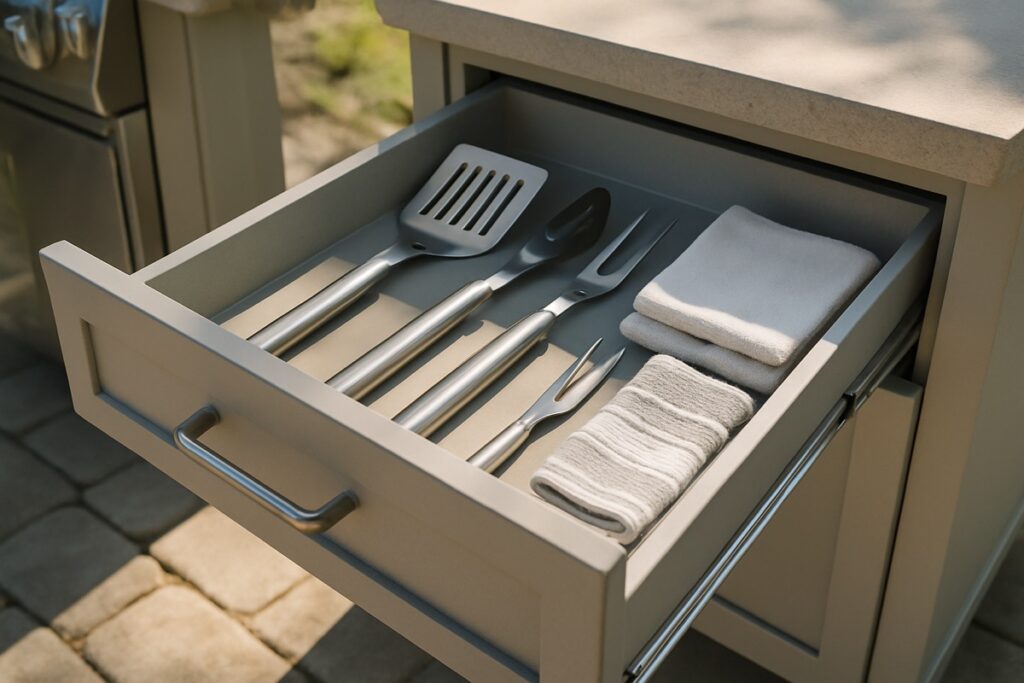
A door base cabinet opens to a single tall cavity, which makes it ideal for bulky items: a propane tank, large pots, a cooler, bags of charcoal, or small appliances you tuck away between uses. Door cabinets also tend to cost less per inch of storage than drawers, so they are an efficient way to add capacity to a build. The trade-off is access. Anything pushed to the back of a deep door cabinet means kneeling and reaching, which gets old fast at counter height. For items you use occasionally, that is a fine trade. For everyday tools, it is not.
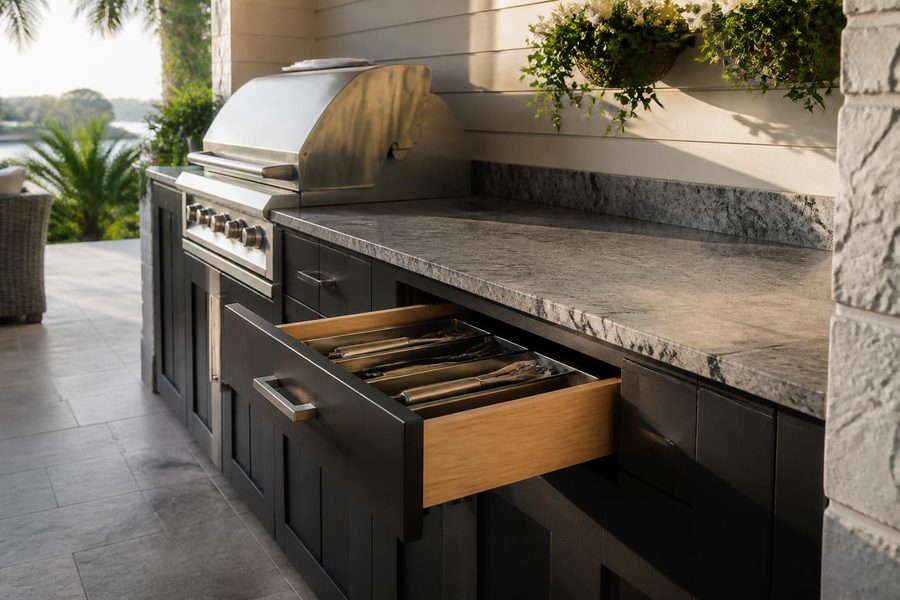
Drawers bring the contents to you. Pull one open and everything inside is visible and within reach, no bending required. That makes a drawer stack the right home for utensils, grilling tools, towels, spices, and plating supplies you grab constantly while cooking. A four-drawer stack also organizes by depth, with shallow drawers up top for small tools and deeper drawers below for plates and serving pieces. The cost is higher than a door cabinet of the same width, but for the items you touch most, the convenience pays for itself every time you cook.
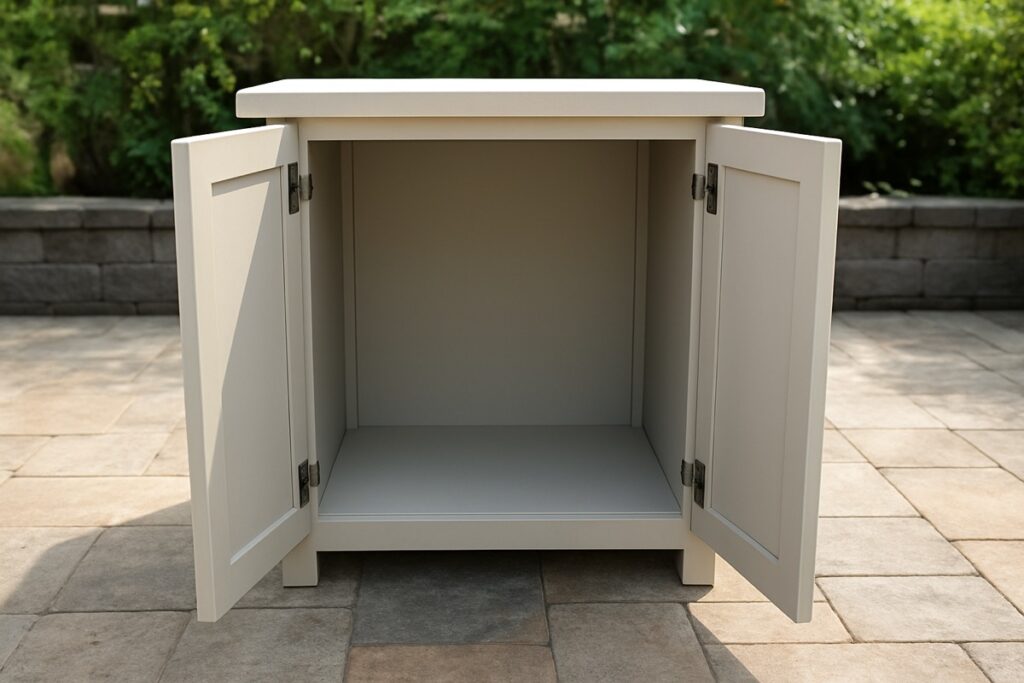
Drawers are not just for small items. Quality outdoor drawer glides are rated for real weight, so deeper drawers handle plates, cast iron, and serving pieces without strain. The key is matching drawer depth to contents: shallow top drawers for tools, medium drawers for linens and supplies, and deep bottom drawers for heavy or bulky cookware. Door cabinets, meanwhile, shine for anything tall or irregular that would waste a drawer’s rectangular space, like a tank or a stockpot. Thinking in terms of item shape and weight, not just category, leads to a layout that actually fits your gear.
A layout we build often looks like this: a drawer stack next to the grill for tools and prep items, a double-door base cabinet near the tank or for bulky storage, and a sink or trash cabinet wherever the plumbing and workflow call for it. The principle is simple: keep the things you use while cooking in drawers within arm’s reach of the grill, and send bulk storage to doors a step or two away. That arrangement keeps you working in one spot instead of crossing the patio mid-cook.
Because our cabinets are marine-grade polymer, both drawers and doors handle Florida weather without swelling, rusting, or rotting. Drawer glides matter here: outdoor drawers should run on stainless or corrosion-resistant hardware so they keep gliding smoothly through humid summers and salt air. When you are comparing options, ask about the glide hardware, not just the box, because the hardware is what determines whether a drawer still feels good to open after a few Florida seasons.
To make this concrete, here is a base run we install often for an Orlando backyard. Starting at the grill, we place a four-drawer stack for tools, towels, and prep items, so everything the cook needs is within a single step. Next to it sits a double-door base cabinet for a propane tank or bulky cookware. A sink or trash cabinet follows wherever the plumbing and prep flow make sense, and a second door cabinet at the end handles overflow and seasonal gear. The result keeps high-use items in drawers at the center of the action and sends bulk storage to doors at the edges. Adjust the widths to your space, but keep the principle: drawers where you cook, doors where you store.
There is no universal right split between drawers and doors, because the best ratio follows how you actually cook. A homeowner who grills simply, a few proteins and vegetables on the weekend, needs less drawer space and can lean on doors for the gear they pull out occasionally. Someone who treats the patio as a full second kitchen, with smokers, prep work, plating, and a rotating cast of tools, benefits from more drawers near the action so nothing requires a trip inside or a deep reach. Entertainers who host large groups often want extra drawer space for serving pieces, linens, and the small supplies that make hosting smooth, plus generous door storage for bulk drinks and coolers. We start every layout conversation by asking how you cook and how often you host, because the honest answer to those two questions settles the drawer-to-door ratio faster than any rule of thumb. The goal is a run that matches your real habits, not an idealized version of them.
Indoors, drawer glides are an afterthought because the environment is mild. Outdoors in Central Florida, the hardware is doing real work against humidity, pollen, and, near the coast, salt in the air. This is the part of a drawer cabinet worth asking about before you buy. Quality outdoor drawers run on stainless or otherwise corrosion-resistant glides that are sealed or designed to shrug off moisture, so they keep opening smoothly through summer after summer instead of growing gritty and stiff. The load rating matters too, since a deep bottom drawer holding cast iron and stacked plates is carrying serious weight every time it opens. We pair our drawers with hardware rated for both the weight and the climate, which is why a drawer that feels solid on day one still glides cleanly years later. When you compare options anywhere, look past the cabinet box and ask specifically what the glides are made of and what they are rated to hold.
Here is a quick exercise we walk homeowners through before finalizing a base run. Open your indoor kitchen drawers and cabinets and notice which ones you reach into without thinking, the ones holding the tools and supplies you use on autopilot. Those are the items that belong in outdoor drawers near the grill, because the same instinct will carry outside. Then notice what lives in the back of your lower cabinets, the things you store but rarely touch. That is door-cabinet material, fine a step or two from the cooking zone. This little audit grounds the drawer-versus-door decision in evidence rather than guesswork, and it almost always reveals that you need fewer big door cabinets and one or two more drawer stacks than you first assumed. It costs nothing to do and it prevents the most common regret we hear, which is wishing a run had been planned with more drawers within arm’s reach of the grill.
Additional resource: For broader context on how cabinets, storage, and appliances come together in an outdoor cooking space, see This Old House’s outdoor kitchen guide.
Are drawers worth the extra cost outdoors? For the items you reach for constantly while grilling, yes. For bulk or occasional storage, doors are the more economical choice, so most kitchens use both.
Can drawers hold heavy items? Quality outdoor drawer glides are rated for real weight, so deeper drawers handle plates, cast iron, and serving pieces well.
What is the most popular setup? A drawer stack beside the grill paired with door cabinets for tanks and bulk storage is the combination we install most.
How do I decide for my own kitchen? List what you reach for while cooking versus what you store between uses. The first group belongs in drawers near the grill; the second belongs in doors nearby.
Explore the full cabinet lineup to compare drawer and door configurations, and reach out through our contact page or call (407) 887-0035 if you want help planning the right mix for how you cook.
Grill tool storage outdoor kitchen cabinets can offer: drawer, divider, and placement tips built for Florida humidity.
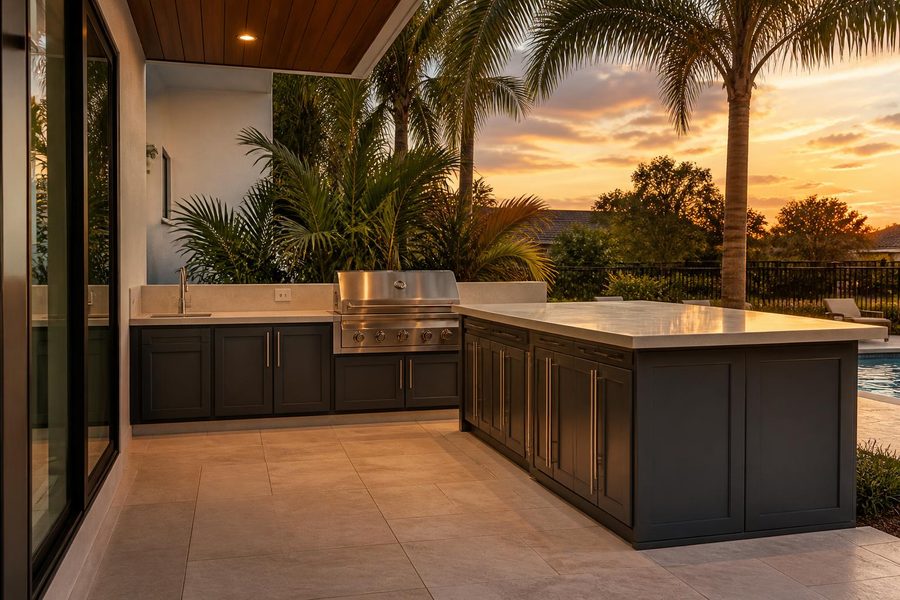
Outdoor kitchen cabinets holiday hosting guide for Central Florida: storage, serving counter space, and traffic flow tips.
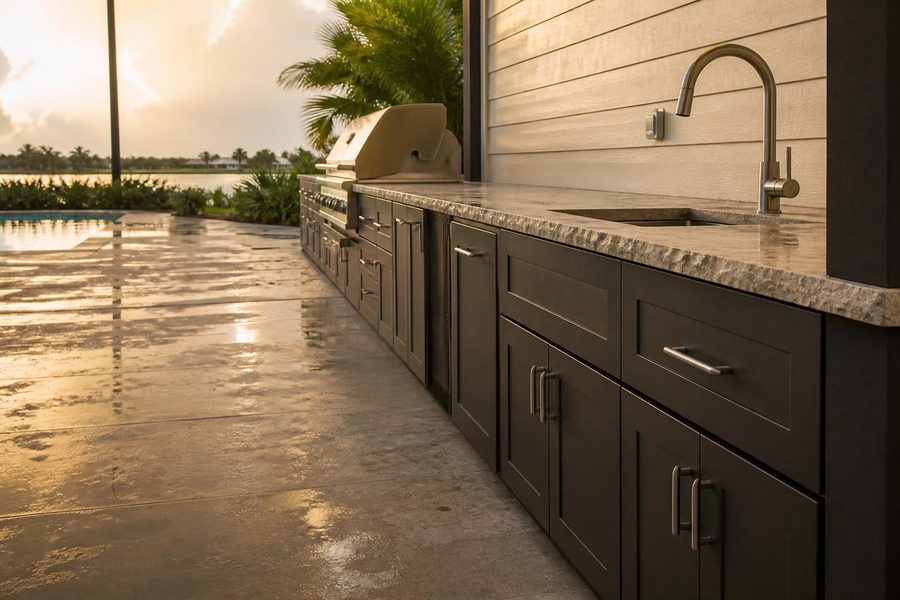
Outdoor kitchen cabinet drainage planning: learn how patio slope, raised bases, and runoff keep outdoor kitchen cabinets dry and long-lasting in Central Florida rain.