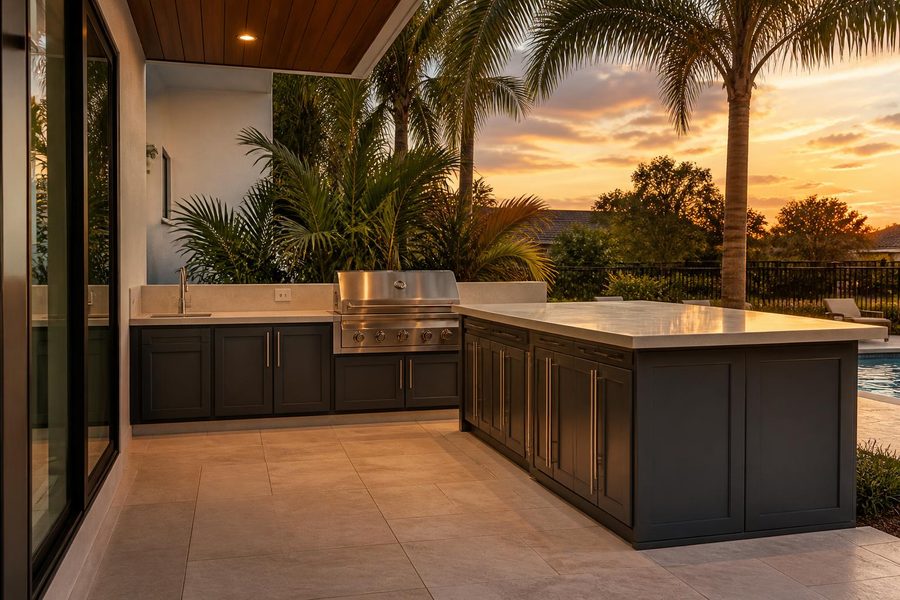
Outdoor Kitchen Cabinets
Planning Outdoor Kitchen Cabinets for Holiday Hosting in Central Florida
Outdoor kitchen cabinets holiday hosting guide for Central Florida: storage, serving counter space, and traffic flow tips.

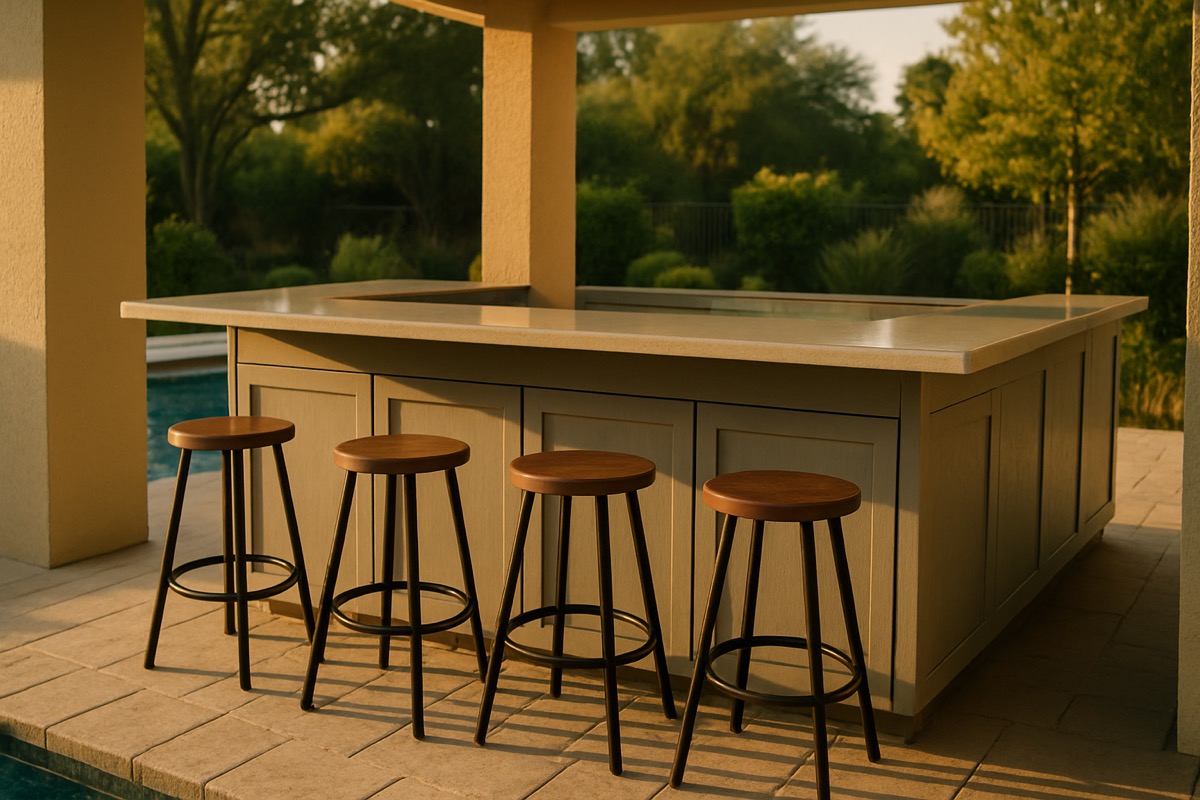
For a lot of Central Florida homeowners, the outdoor bar is where the party actually happens. It is the spot where guests gather, drinks get poured, and the cook stays part of the conversation. Building a bar that works for real entertaining is mostly about smart cabinetry and storage. Here are the ideas we come back to most, from the seating overhang to the small upgrades that make hosting effortless.
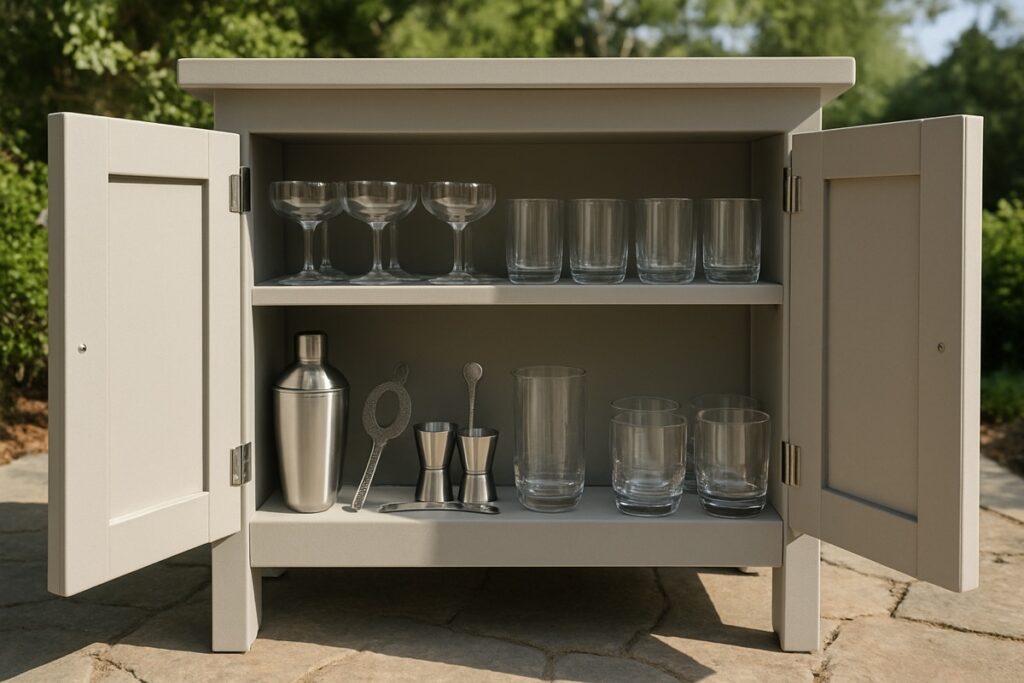
The single feature that turns a counter into a bar is a raised or extended overhang with room for stools. Plan for roughly 12 inches of overhang and about 24 inches of width per seat so guests are comfortable. Positioning the bar so seated guests face the grill or the pool keeps everyone connected to the action. A raised bar section also hides the cooking mess from guests on the other side, which is a nice touch when you are hosting. Underneath, the cabinets do the work of storing everything the bar needs.
A well-planned bar hides its supplies within reach. Drawers hold bottle openers, napkins, straws, and bar tools. A door cabinet stores glassware, mixers, and bulk supplies. Many homeowners add a dedicated cabinet for a beverage refrigerator or ice bin so cold drinks never require a trip inside. The goal is simple: everything you need to host should live at the bar, so no one is running back to the kitchen mid-gathering. When the bar is self-sufficient, hosting feels relaxed instead of hectic.
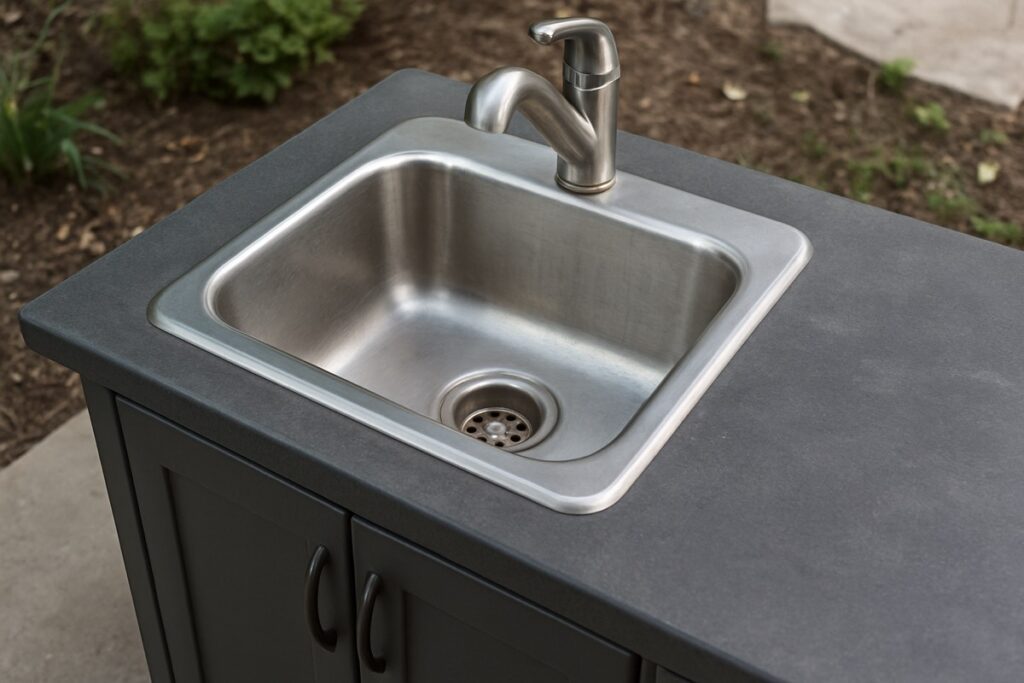
A few appliances elevate an outdoor bar from a counter to a destination. A beverage refrigerator keeps drinks cold within arm’s reach. An ice maker or built-in ice bin means you are never hauling bags from inside. A kegerator suits homeowners who entertain often, and a compact sink handles rinsing and cleanup. You do not need all of them, but choosing one or two based on how you host makes the bar genuinely more useful. We help homeowners size cabinets to the exact appliances they want so everything fits cleanly.
A compact bar sink is one of those upgrades homeowners rarely regret. It handles rinsing, ice, and quick cleanup without leaving the patio. If you are already running plumbing for a main outdoor kitchen sink, extending it to a bar sink is often straightforward. Where plumbing is not practical, a beverage cooler and an ice bin cover most of the need, so do not let the absence of plumbing stop you from building a great bar.
Every cold-storage upgrade on this list needs electricity, and power planning is the step that catches homeowners off guard most often. Outdoor receptacles serving a bar must be GFCI-protected, and a beverage refrigerator or kegerator is happiest on its own dedicated circuit so a tripped breaker never warms the drinks mid-party. Think through the small details too: an ice maker needs a water line as well as an outlet, and under-counter lighting needs a switched feed that is easy to reach from the serving side. Rough in the wiring while the layout is still on paper, because adding an outlet after the countertops and cabinets are set means opening up finished work. We coordinate cabinet sizing and appliance cutouts with the electrician’s rough-in so outlets land inside cabinets and cords stay out of sight.
An outdoor bar takes the same weather as the rest of the kitchen, so marine-grade polymer cabinets are the right base here too. Spills, condensation, and rain do not faze them, and they wipe clean after a long night of hosting. Pair the cabinets with a durable countertop and corrosion-resistant hardware and the bar will look as good next season as it does at its first party.
On a pool deck, an island bar lets guests gather on the water side while the cook works the other. On a screened lanai, an L-shaped run with a bar leg defines a serving zone without crowding the space. Even a compact straight run can include a short bar section at one end. The right layout depends on your patio, but the principle holds: give guests a comfortable place to sit and keep the supplies they need close at hand.
The best outdoor bars are designed around a specific style of hosting rather than a generic idea of one. A homeowner who throws large, frequent gatherings benefits from a long bar with plenty of seats, generous cold storage, and maybe a kegerator so the drinks never run dry mid-party. Someone who hosts smaller, quieter evenings may want just a short bar section with a couple of stools and a beverage cooler, leaving more of the patio open for conversation. Families with kids around the pool often want the bar positioned so an adult mixing drinks can keep eyes on the water, which makes seating orientation a safety decision as much as a social one. Before settling on a size and feature set, we ask homeowners to picture their three most common gatherings and design for those, not for the one big party a year. A bar sized to your real, regular hosting gets used constantly; one built for an imagined crowd often sits half-empty and takes up patio you would rather have back.
In Central Florida the bar earns its keep after the sun drops and the air finally cools, so light and shade belong in the plan from the start rather than as afterthoughts. Under-counter lighting along the bar makes pouring and serving easy without a harsh overhead glare, and it gives the whole bar a warm, inviting edge once it is dark. A few soft fixtures or a run of string lights above the seating set a relaxed mood that keeps guests lingering rather than drifting inside. Shade matters earlier in the day: a bar in full afternoon sun benefits from a pergola, an umbrella, or placement under the lanai, both for comfort and to keep cold drinks from warming too fast. If the bar sits near the pool, coordinating its lighting with the deck and water features makes the whole space read as one scene rather than separate zones. Thoughtful light and shade do as much as any cabinet to make a bar the place everyone naturally ends up.
Additional resource: For trade guidance on outdoor hearth, patio, and barbecue products as you outfit your bar, the Hearth, Patio & Barbecue Association (HPBA) is a recognized industry resource.
How much overhang does a bar need for stools? About 12 inches of overhang and 24 inches of width per seat keeps guests comfortable.
Do I need a sink at an outdoor bar? It is not required, but a small bar sink adds real convenience. A beverage cooler and ice bin are good alternatives where plumbing is hard.
Can a bar fit on a small patio? Yes. Even a short bar section at the end of a straight run gives you seating and serving space.
What appliance should I add first? For most homeowners, a beverage refrigerator delivers the biggest day-to-day improvement at a bar.
See outdoor bars in real Central Florida yards in our project gallery, explore the cabinet lineup, and reach out through our contact page or at (407) 887-0035 to plan a bar for your Winter Park or Orlando patio.
Outdoor kitchen cabinets holiday hosting guide for Central Florida: storage, serving counter space, and traffic flow tips.
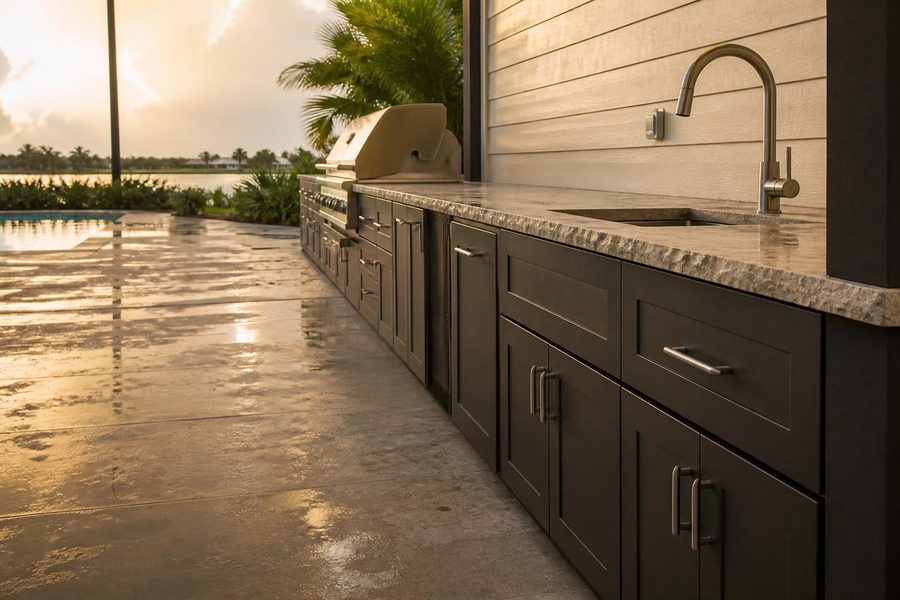
Outdoor kitchen cabinet drainage planning: learn how patio slope, raised bases, and runoff keep outdoor kitchen cabinets dry and long-lasting in Central Florida rain.
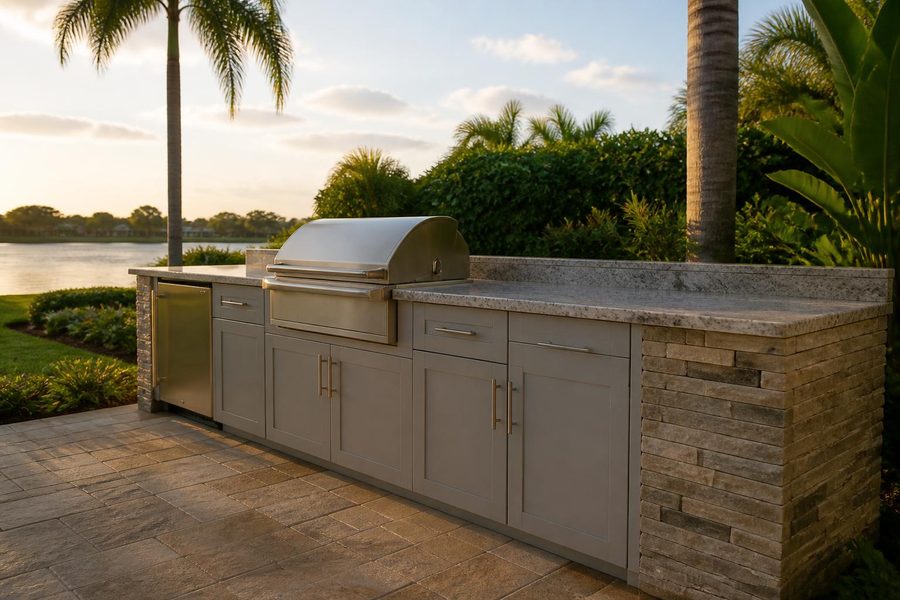
Outdoor kitchen cabinets Lake Mary homeowners can plan around: lanai, patio, and lakeside layouts with humidity and material tips.