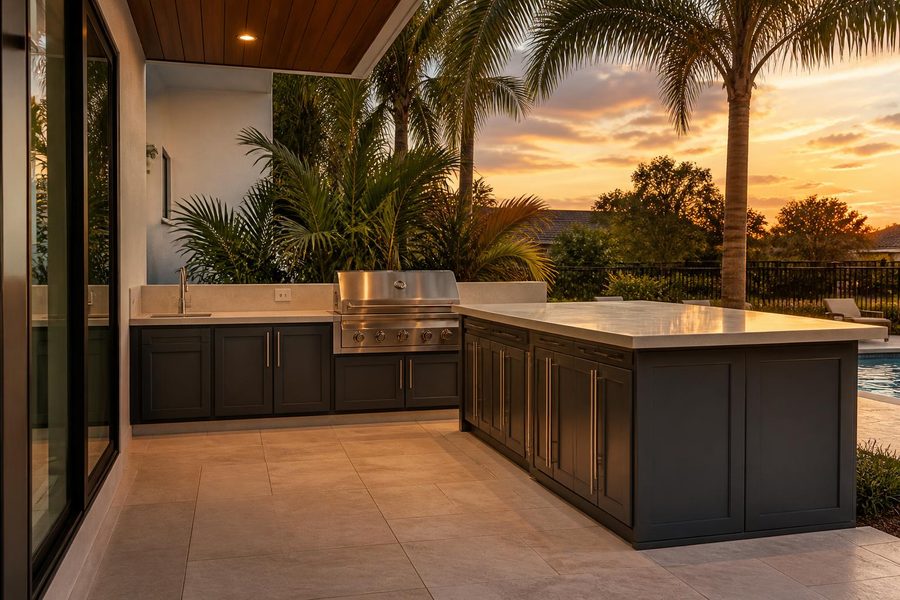
Outdoor Kitchen Cabinets
Planning Outdoor Kitchen Cabinets for Holiday Hosting in Central Florida
Outdoor kitchen cabinets holiday hosting guide for Central Florida: storage, serving counter space, and traffic flow tips.

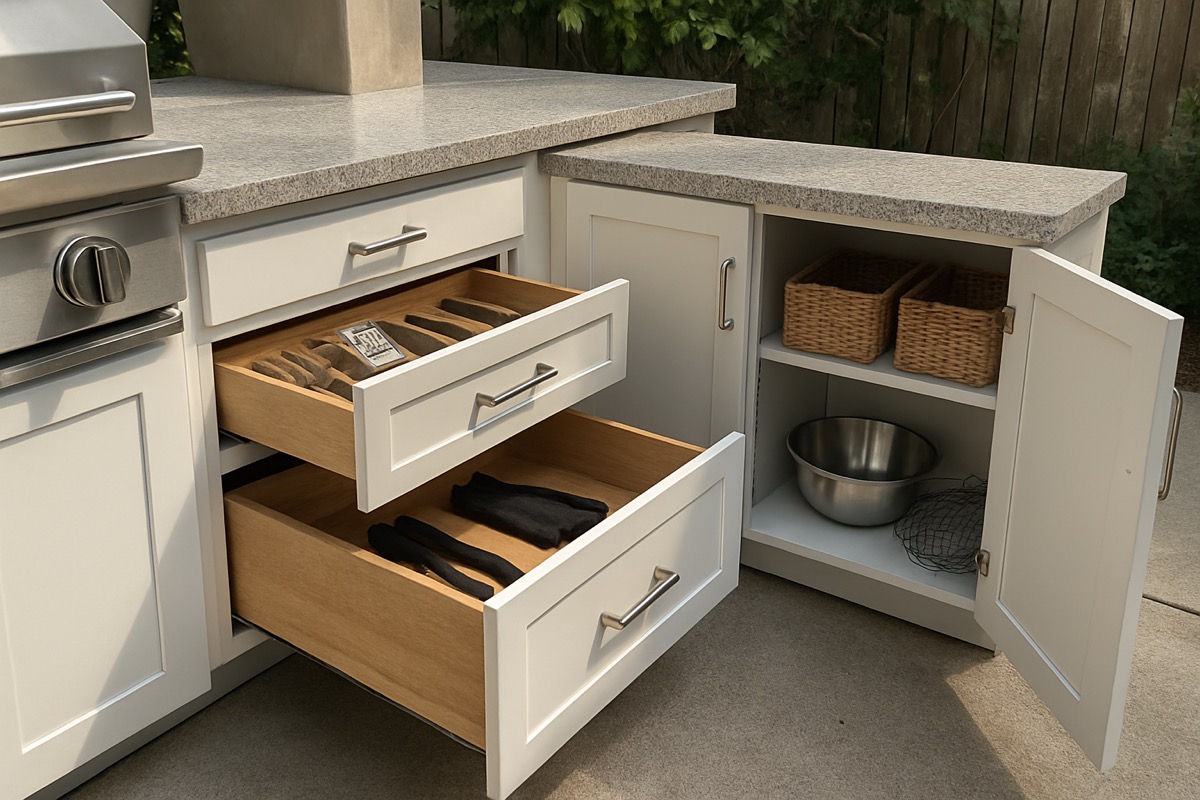
Counter space gets the attention, but storage is what makes an outdoor kitchen genuinely easy to use. The right add-ons keep tools at hand, hide what should be hidden, and squeeze usable space out of every cabinet. Here are the storage upgrades we recommend most for Orlando outdoor kitchens, and how to plan them around the way you actually cook.
Few things improve an outdoor kitchen more than getting the trash off the floor and out of sight. A trash cabinet houses a bin behind a door or pull-out, often with a louvered front for airflow that keeps odors from building up in the Florida heat. Placing it near the prep zone means scraps go straight in while you cook, instead of piling up on the counter. Some homeowners size theirs for two bins so recycling has a home too. It is a small addition that changes how clean the whole kitchen feels.
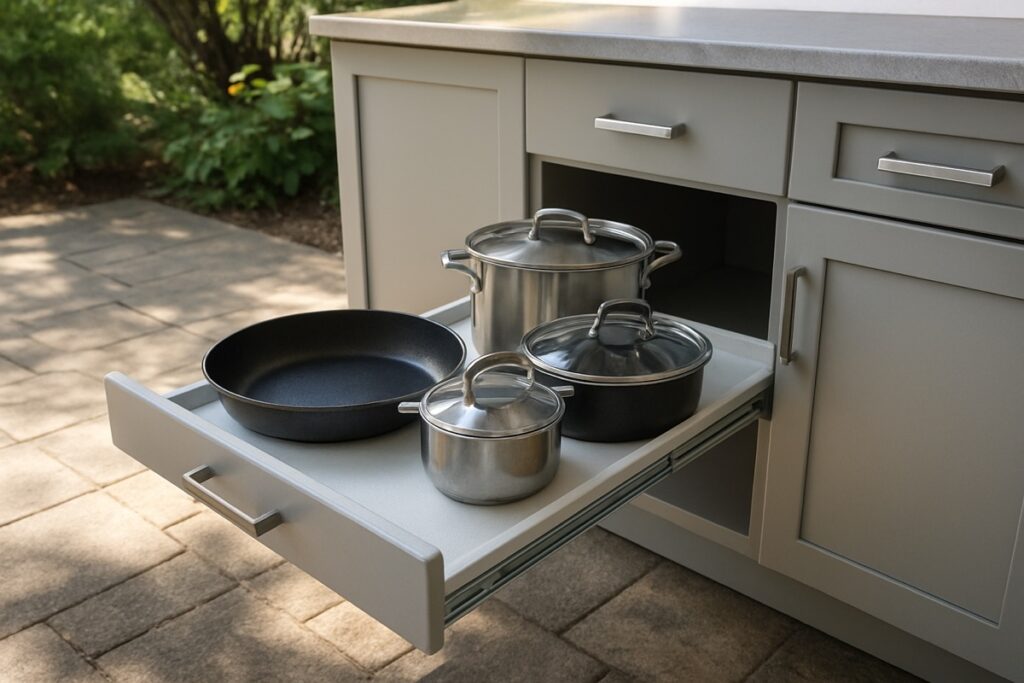
Deep cabinets waste space when the back becomes a place things disappear. Pull-out shelves and roll-out trays bring the contents forward so nothing gets lost. They are especially useful in base cabinets that store bulky cookware, sauces, or small appliances. Instead of kneeling and reaching into a dark cavity, you slide the shelf out and everything is in view. For homeowners who like a door cabinet’s capacity but not its access, pull-outs are the best of both worlds. Because they are moving parts living outdoors, insist on corrosion-resistant glides and hardware: the right ones keep running cleanly through humid Central Florida summers, while cheap ones bind and stick within a season or two. Check the load rating before you buy, too. A shelf that will carry cast iron, a stack of platters, or a case of drinks needs full-extension glides rated for that weight, or it will start to sag and drag long before the cabinet around it shows any age.
A drawer full of loose grilling tools is a drawer you dig through. Simple organizers and dividers give tongs, spatulas, thermometers, and skewers a home, so you grab what you need without looking. For the drawer nearest the grill, this small upgrade saves real frustration during a cook. Dividers also keep contents from sliding into a pile every time you open and close the drawer, which matters more outdoors where you are often moving quickly between tasks. Two details make the difference between an organizer you love and one you fight. Pick inserts you can lift straight out, because outdoor drawers collect crumbs, ash, and yard debris far faster than indoor ones and are much easier to clean when the dividers come free. And size them to the full depth of the drawer, since a divider that stops short of the back gives small items a place to migrate to, which is exactly the problem you were trying to solve.
Corners are where outdoor kitchen storage quietly disappears, and in an L-shaped or U-shaped run they can swallow a surprising amount of usable room. A purpose-built corner cabinet solves this directly, turning the awkward junction where two runs meet into accessible, everyday storage instead of a place things go to be forgotten. Depending on the layout, the recovered space can hold bulky cookware, small appliances, or the overflow that otherwise clutters a counter. When homeowners with L-shaped or U-shaped layouts tell us they feel short on storage, the corner is almost always where the missing space went, and a corner cabinet is almost always the way to get it back.
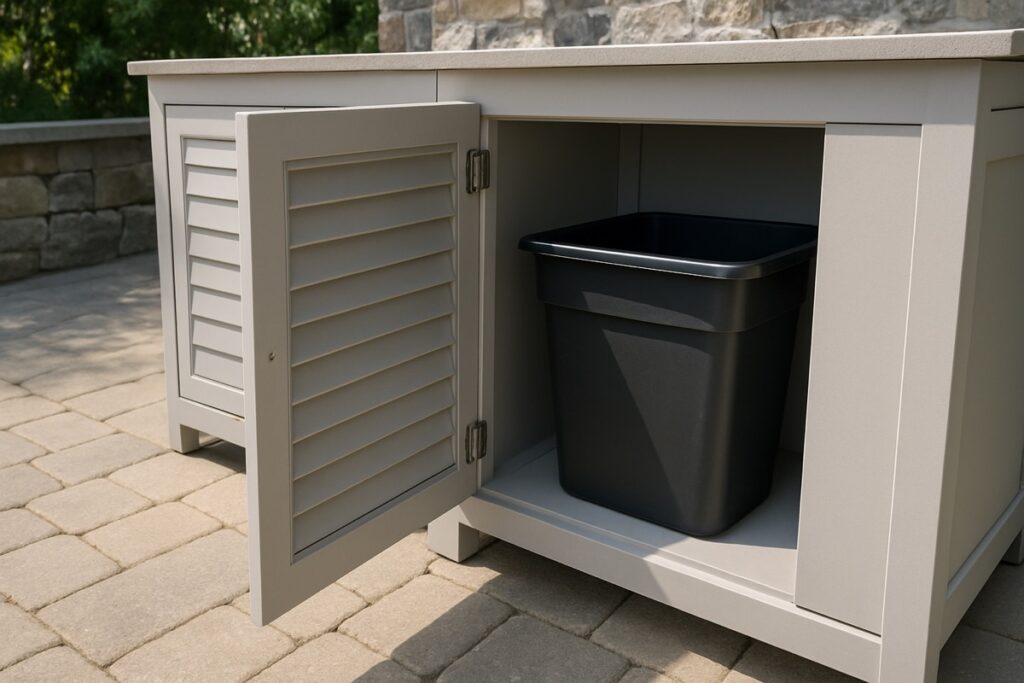
Anything that benefits from airflow deserves a ventilated cabinet. A louvered-door cabinet is the right home for a propane tank, keeping it enclosed and out of sight while still allowing the air movement that safety calls for. The same approach helps with cleaning supplies and anything that might trap moisture in Florida’s humidity. Size the cabinet for the tank you actually use, and keep the louvers clear of stacked supplies so the air can keep moving.
If planning storage feels abstract, start with a simple exercise: name the three things you reach for every single time you grill. For most homeowners that is tongs, a thermometer, and a towel. Those items should live in a drawer within arm’s reach of the grill, full stop. From there, think of the run as a few distinct stations and stock each one with what it needs. The grill zone wants tools, towels, and seasonings in drawers within a single step, so nothing pulls you away from the heat. The prep zone, wherever you do your cutting and plating, wants cutting boards, knives, and serving pieces close at hand. The storage zone, a step or two from the action, is the home for bulk supplies, the propane tank, coolers, and anything seasonal you reach for occasionally. When each cabinet’s contents match the station it sits in, the kitchen stops sending you back and forth across the patio mid-cook. Zones also make the kitchen easier for guests to help in, since someone grabbing a tool or tossing a scrap knows exactly where it goes without asking. Designing storage this way, rather than filling cabinets in whatever order they were installed, is the difference between a kitchen that works and one that constantly sends you searching.
Some add-ons can go in any time, and some are effectively build-time decisions. Knowing which is which keeps you from paying twice. The easy retrofits are the ones that live inside a box you already have: drawer organizers and dividers drop straight in, bin inserts swap out in an afternoon, and many pull-out shelves can be added later as long as the cabinet opening is wide enough and the box is square. The build-time items are the ones that depend on geometry. A corner cabinet has to be designed into the run, because the corner is set the day the layout is fixed. Where a ventilated cabinet lands is the same kind of decision, since it needs to sit near what it serves and within reach of the gas line. Anything that needs a cutout, such as a grill, a side burner, a sink, or an under-counter refrigerator, belongs on the drawing before fabrication starts. If you are undecided, commit to the openings and the corner now and leave the inserts for later.
What a cabinet is made of decides how long it stays easy to use. Marine-grade HDPE is what we build with, and it suits Central Florida well. The color runs all the way through the panel, so there is no coating to chalk, peel, or flake after a few summers of direct sun. It will not rust, rot, swell, or delaminate in the humidity, the material is UV stabilized, and it cleans with soap and water rather than polishes or annual refinishing. Powder-coated aluminum and stainless steel turn up in outdoor kitchens as well. With aluminum, the finish grade and the hardware behind it decide how long it looks new; with stainless, grade is worth asking about before salt air and pool chemicals weigh in. Whatever the material, ask about gasketing at the doors and drawers to keep driving rain out, and about drainage in the cabinet floor so anything that does get in has a way back out.
Additional resource: Because some storage add-ons house propane tanks, it is worth reviewing the National Fire Protection Association’s grilling and propane safety guidance for safe ventilation and placement.
What is the most useful storage add-on? For most homeowners, a dedicated trash cabinet near the prep zone makes the biggest day-to-day difference.
Do pull-outs hold up outdoors? With corrosion-resistant hardware, yes. They run smoothly through humid Florida summers when built for outdoor use.
How do I use a corner in my layout? A dedicated corner cabinet turns the junction of two runs into accessible storage instead of wasted space.
Where should a propane tank go? In a ventilated, louvered-door cabinet that keeps it out of sight while allowing airflow.
Explore trash cabinets, corner cabinets, and more in the cabinet lineup, and reach out through our contact page or at (407) 887-0035 if you want help planning storage around how you cook.
Outdoor kitchen cabinets holiday hosting guide for Central Florida: storage, serving counter space, and traffic flow tips.
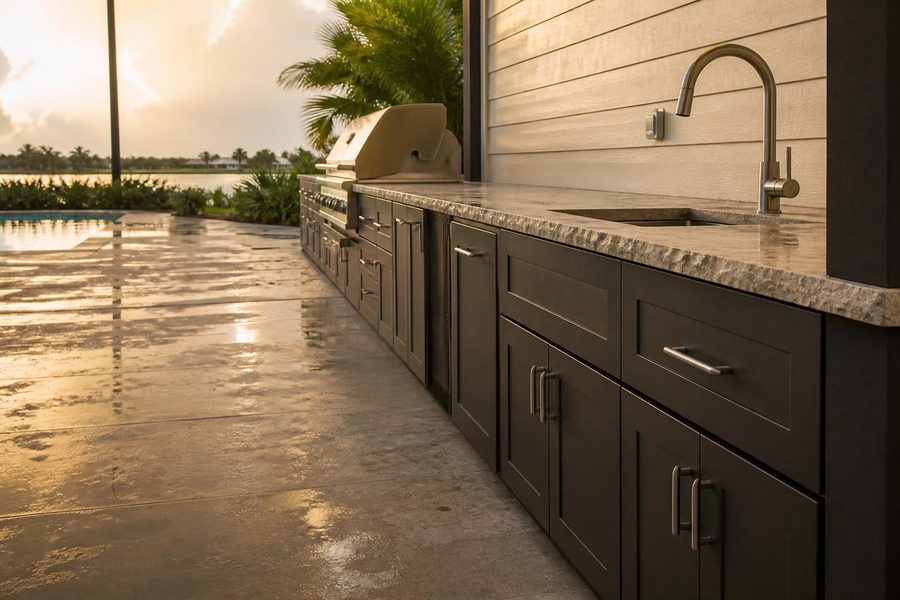
Outdoor kitchen cabinet drainage planning: learn how patio slope, raised bases, and runoff keep outdoor kitchen cabinets dry and long-lasting in Central Florida rain.
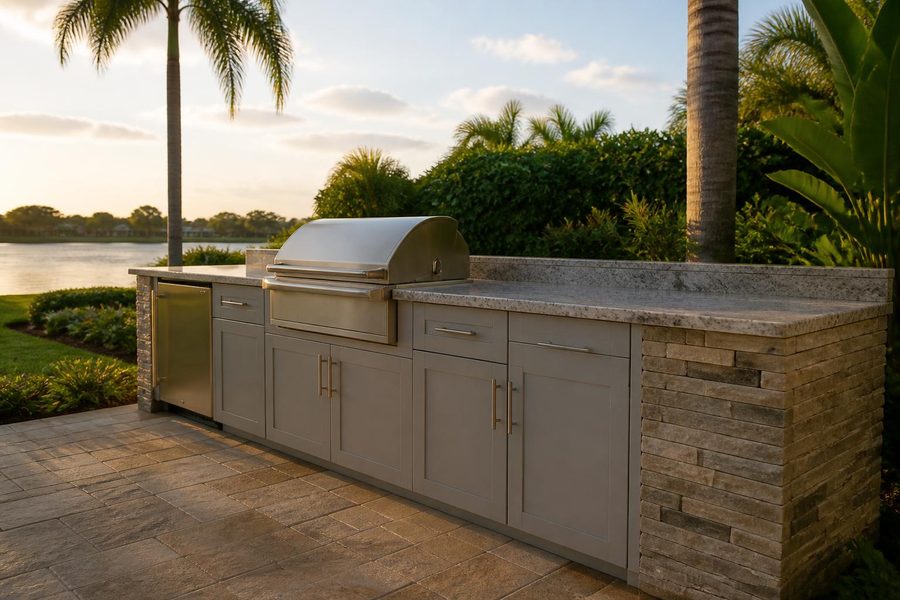
Outdoor kitchen cabinets Lake Mary homeowners can plan around: lanai, patio, and lakeside layouts with humidity and material tips.