
Outdoor Kitchen Cabinets
Planning Outdoor Kitchen Cabinets for Holiday Hosting in Central Florida
Outdoor kitchen cabinets holiday hosting guide for Central Florida: storage, serving counter space, and traffic flow tips.

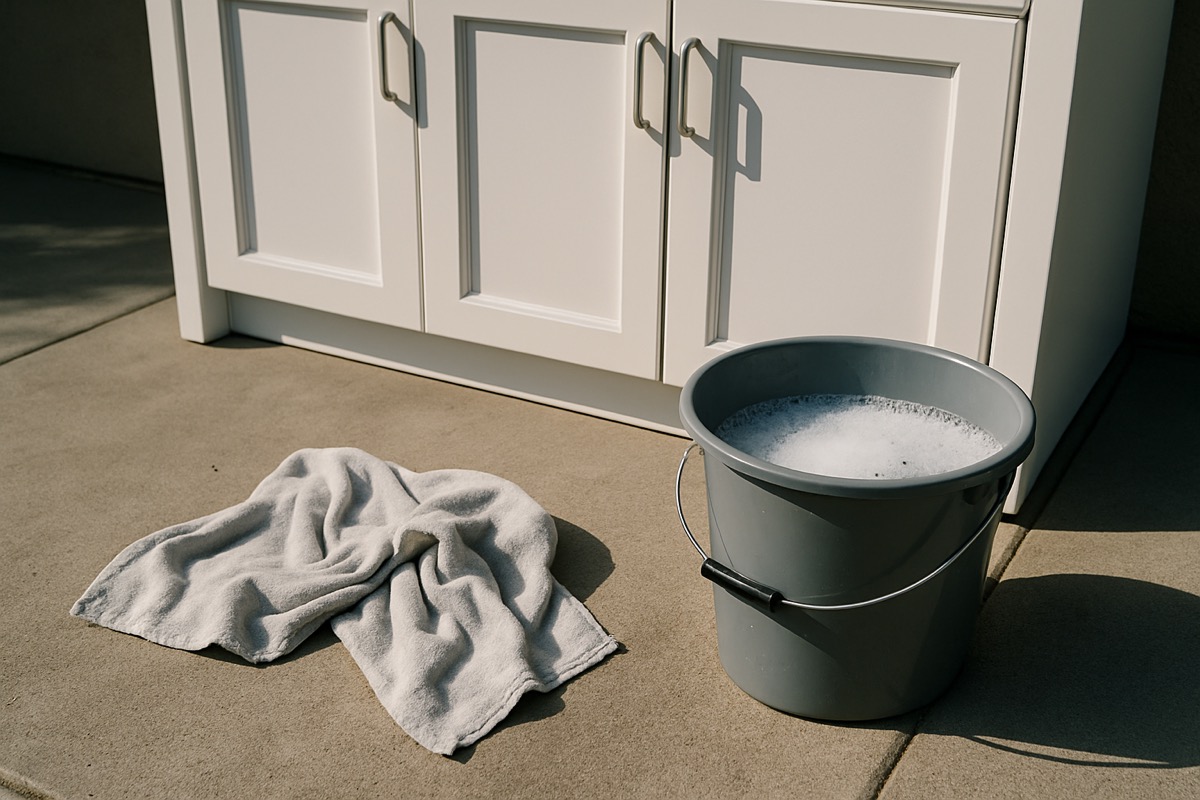
One reason homeowners choose marine-grade polymer is that it asks for so little. There is no wood to seal, no metal to rust, and no finish to refresh. Still, an outdoor kitchen lives through Florida pollen season, summer humidity, and coastal salt air, so a light routine keeps everything looking its best. Here is the simple care plan we share with every client, from the daily wipe-down to the twice-a-year once-over.
For everyday upkeep, mild soap and warm water are all you need. Wipe down cabinet fronts, countertops, and hardware with a soft cloth or sponge, then rinse. This is enough to handle cooking splatter, fingerprints, and the yellow film that pollen season leaves on everything in Central Florida. Because polymer is non-porous, nothing soaks in, so spills wipe away rather than staining. A quick pass after each cook keeps buildup from ever starting, which is far easier than scrubbing later.
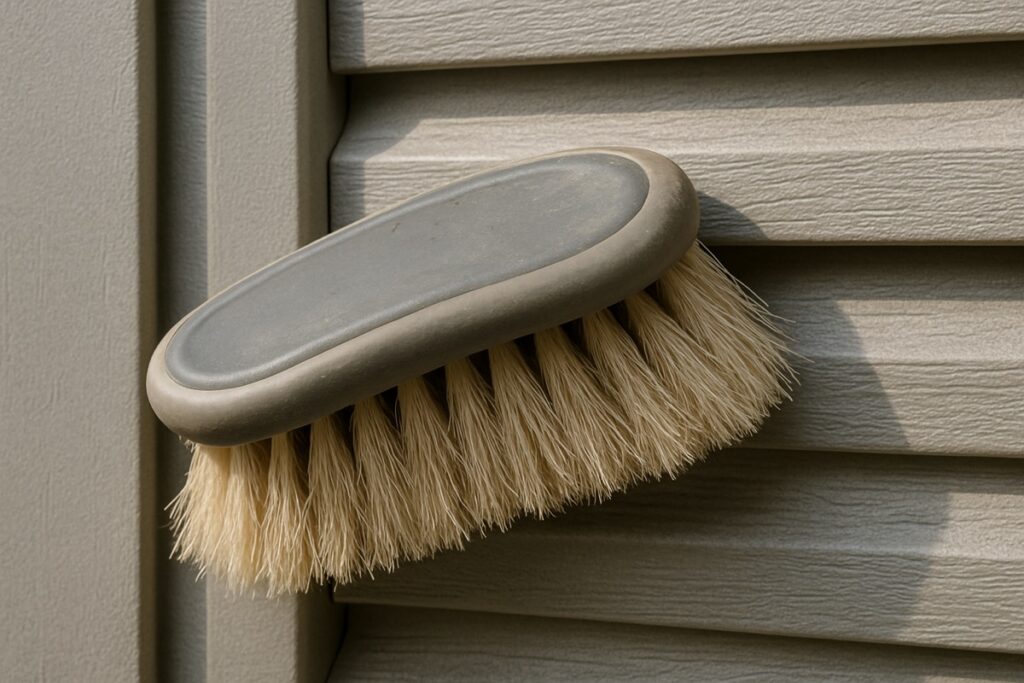
For stubborn grease near the grill or hard-water spots, a non-abrasive household cleaner works well. Avoid harsh solvents, high concentrations of bleach, and abrasive pads, which are unnecessary and can dull the surface over time. A soft-bristle brush helps clean louvered doors and any textured areas where debris collects. Rinse thoroughly afterward so no cleaner residue is left to attract more dirt. The goal is gentle and consistent, not aggressive, because polymer responds best to mild care.
Florida’s two biggest challenges are humidity and, near the coast, salt. Humidity can encourage mildew on any outdoor surface, but because polymer is non-porous, a wipe with mild soapy water removes it easily and it has nothing to root into. For homes closer to the water, salt is the main thing that dulls metal, so rinse stainless hardware a little more often to keep it bright. Keeping the area under and behind the cabinets free of damp leaves also helps, since trapped moisture is what mildew likes most.
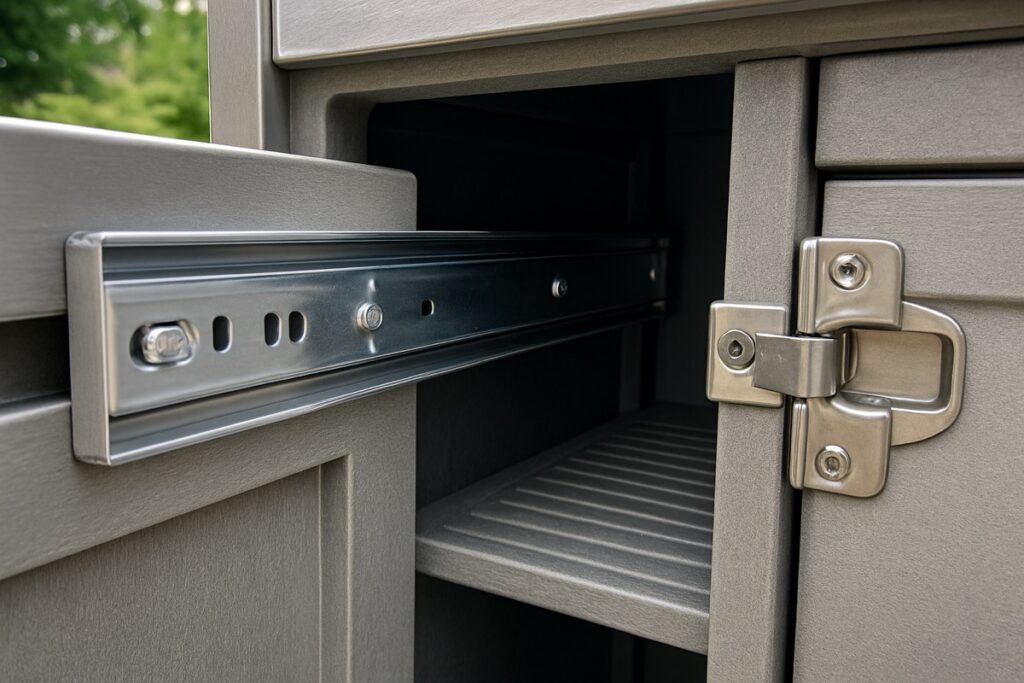
The cabinet boxes are essentially maintenance-free, but moving parts benefit from occasional attention. Wipe stainless hinges and handles to keep salt and grime from dulling them, and check that drawer glides still run smoothly. If a glide feels gritty after a dusty season, a quick wipe and, if recommended by the hardware, a light food-safe lubricant keeps it gliding. These small touches keep the kitchen feeling new rather than worn, and they take only a minute.
Twice a year, give the whole kitchen a closer look. Clean behind and under cabinets where leaves and debris gather, check that any sealant around sinks or seams is intact, and confirm appliance cabinets still have clear airflow. Inspect the area around a tank cabinet for anything that might block ventilation. These ten-minute checks catch small issues before they matter and keep the space ready for the next gathering. Many homeowners pair them with the start and end of grilling season so they are easy to remember.
It is worth naming what polymer frees you from: no sanding, no repainting, no sealing the cabinet boxes, and no worrying about warping after a rainy week. That durability is the whole point, and it is backed by warranty coverage. If you ever have a question about what your coverage includes, our ordering, returns, and warranty page lays it out so you know exactly what is protected.
If you prefer a routine you can follow without thinking, here is the short version. After each cook, wipe the fronts and counter with mild soapy water. Once a month, give the hardware a wipe and check that drawers glide cleanly. Twice a year, clean behind and under the cabinets, confirm any sink or seam sealant is intact, and make sure tank and trash cabinets still have clear airflow. Near the coast, rinse stainless hardware a little more often to fight salt. That is the entire program. Polymer does the heavy lifting by resisting rot, rust, and fading, so your part stays light and the kitchen keeps looking new season after season.
Anyone who has lived through a Central Florida spring knows the yellow film that coats every outdoor surface for weeks. Your outdoor kitchen is no exception, and pollen season is the one time of year a polymer cabinet asks for slightly more frequent attention, though never anything difficult. Because the material is non-porous, pollen never bonds to it the way it stains porous surfaces; it simply sits on top and rinses away. The easiest approach during the heaviest weeks is a quick rinse with the hose followed by a wipe with mild soapy water, which clears the film from fronts, counters, and hardware in a couple of minutes. Pay a little extra attention to shaker panel ledges and louvered slats, where pollen likes to gather, using a soft brush to flick it out of the grooves. Keeping up with it weekly through the peak beats letting it build into a thicker layer, and it keeps the kitchen looking fresh during the season when everything else in the yard looks dusted in gold.
For homeowners closer to the water, salt in the air is the main thing that dulls an otherwise low-maintenance kitchen, and it works on the metal rather than the polymer. The cabinet boxes themselves are essentially immune, but stainless hinges, handles, and drawer glides benefit from a little more frequent care in a coastal setting. A quick freshwater rinse of the hardware, followed by a wipe with a soft cloth, clears the fine salt residue before it has a chance to leave spots or dull the finish. Where a manufacturer recommends it, a light food-safe lubricant on the drawer glides keeps them running smoothly through humid, salty summers. None of this is demanding, but the difference between hardware that stays bright for years and hardware that looks tired after a couple of seasons usually comes down to whether the salt was rinsed off regularly. If you live within sight of the water, fold a hardware rinse into the same routine you already use for the rest of the patio.
Two natural checkpoints make the seasonal once-over easy to remember: the start of heavy grilling weather and the end of it. At each, give the kitchen ten focused minutes. Pull anything stored at the back of door cabinets and wipe the interiors, since out of sight is where the occasional bit of moisture or debris hides. Clean behind and underneath the run where leaves and pollen collect, because trapped damp debris is the one thing that can encourage mildew on any outdoor surface. Confirm that any sealant around a sink or a seam is still intact, and check that tank and trash cabinets have clear, unobstructed airflow through their louvers. Run each drawer in and out a few times to feel for any grit in the glides. None of these checks usually turns anything up, which is exactly the point; they are cheap insurance that catches the rare small issue while it is still small, and they leave the kitchen ready for the next gathering without a scramble.
Additional resource: For broader context on maintaining an outdoor cooking space over time, This Old House’s outdoor kitchen guide offers a helpful independent reference.
What should I clean polymer cabinets with? Mild soap and warm water for routine cleaning, and a non-abrasive cleaner for tougher buildup. Skip harsh solvents and abrasive pads.
Do polymer cabinets fade in the sun? The color runs through the material and is UV-stable, so it holds up to Florida sun far better than painted finishes.
How often should I clean an outdoor kitchen? A quick wipe after cooking plus a closer seasonal cleaning a couple of times a year is plenty.
Will humidity cause mildew on the cabinets? Because polymer is non-porous, any surface mildew wipes off easily with soapy water and has nothing to root into.
Have a maintenance question about your build, or planning a new one? Explore the cabinet lineup and reach out through our contact page or at (407) 887-0035. We are always glad to help an Orlando homeowner keep an outdoor kitchen looking new.
Outdoor kitchen cabinets holiday hosting guide for Central Florida: storage, serving counter space, and traffic flow tips.
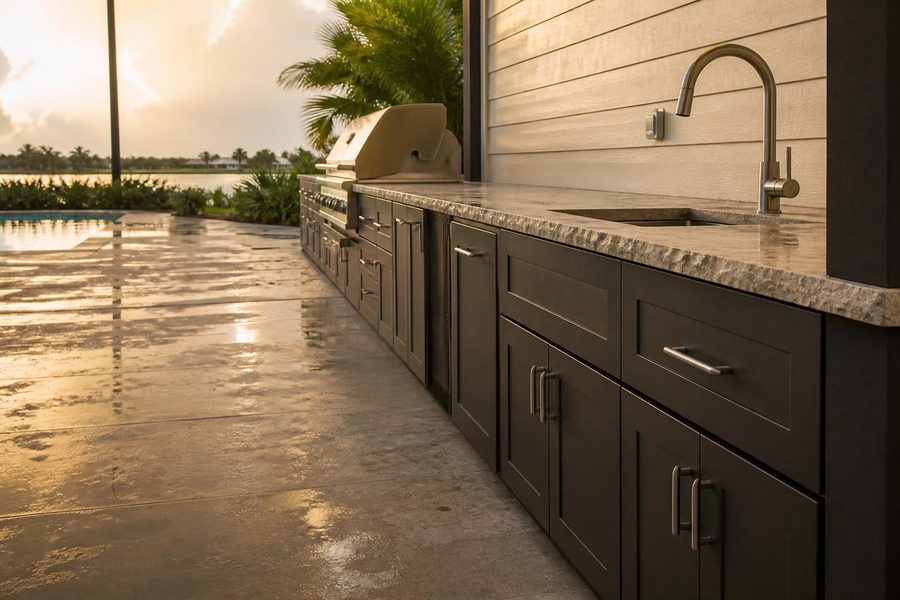
Outdoor kitchen cabinet drainage planning: learn how patio slope, raised bases, and runoff keep outdoor kitchen cabinets dry and long-lasting in Central Florida rain.
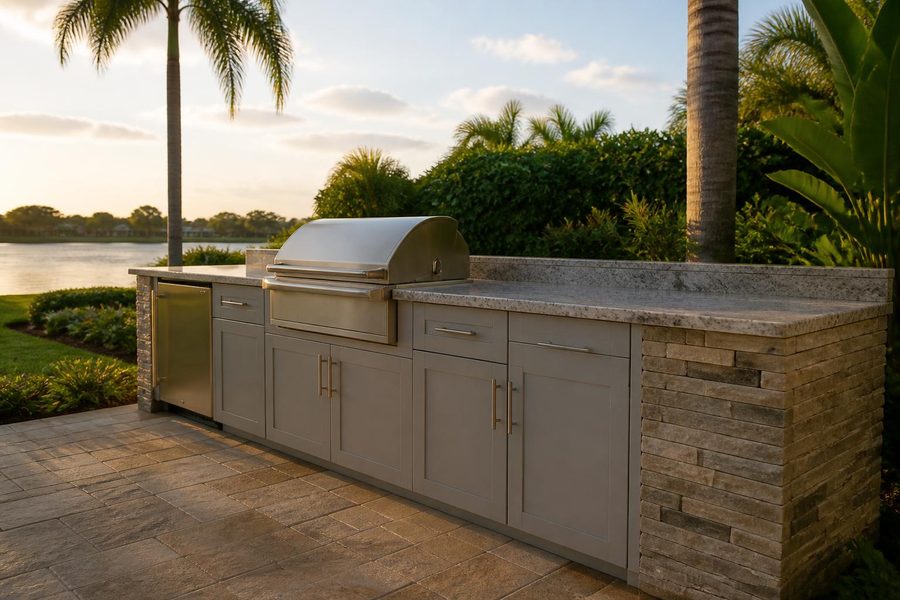
Outdoor kitchen cabinets Lake Mary homeowners can plan around: lanai, patio, and lakeside layouts with humidity and material tips.