Design And Inspiration
Best Countertop Materials to Pair With Polymer Outdoor Cabinets
Your cabinets are weatherproof. Make sure your countertop is too. Here are the surfaces that pair best with polymer outdoor cabinets in Florida.

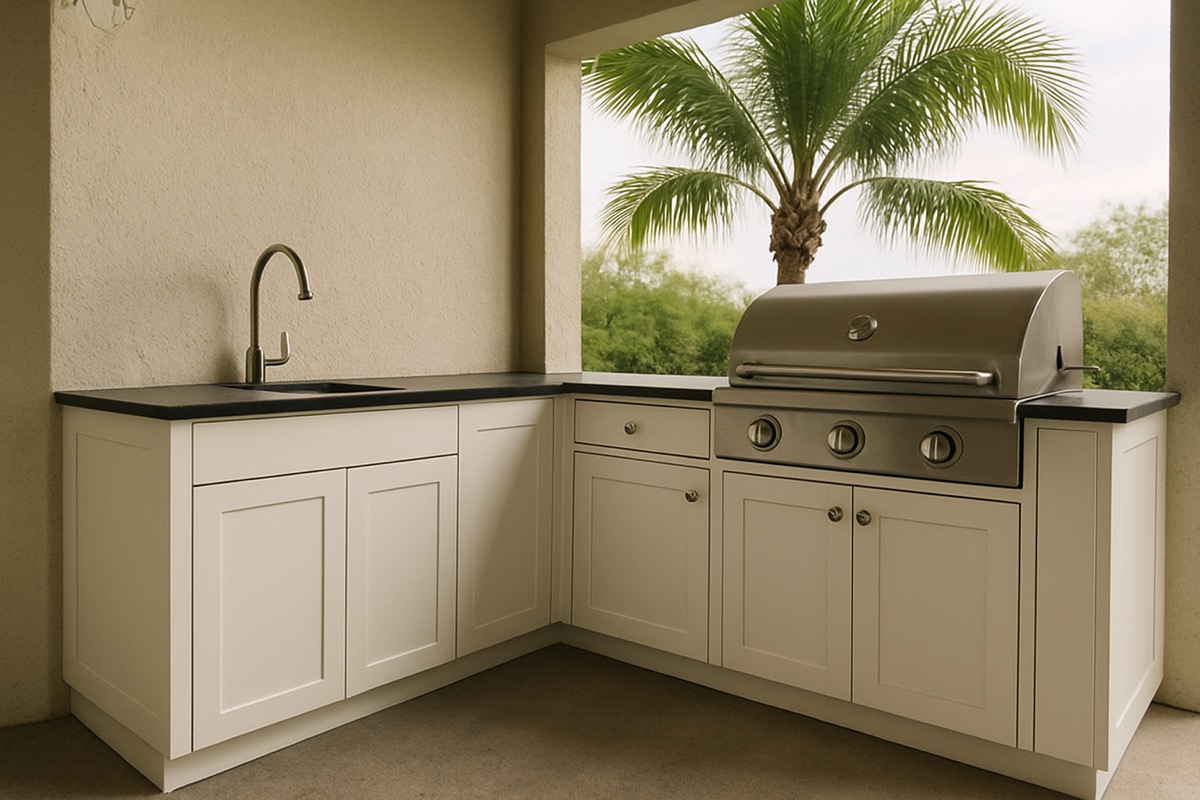
The door style you choose does more than set the look of your outdoor kitchen. Outdoors, it also decides how the cabinet sheds water, handles ventilation, and ages through a Central Florida summer. When homeowners in Orlando come to us unsure where to start, we usually walk them through the same three families of door styles: slab, shaker, and louvered. Each one has a place, and the best outdoor kitchens often use more than one. Here is how we think about each option, and how to combine them so your kitchen looks intentional and works the way you cook.
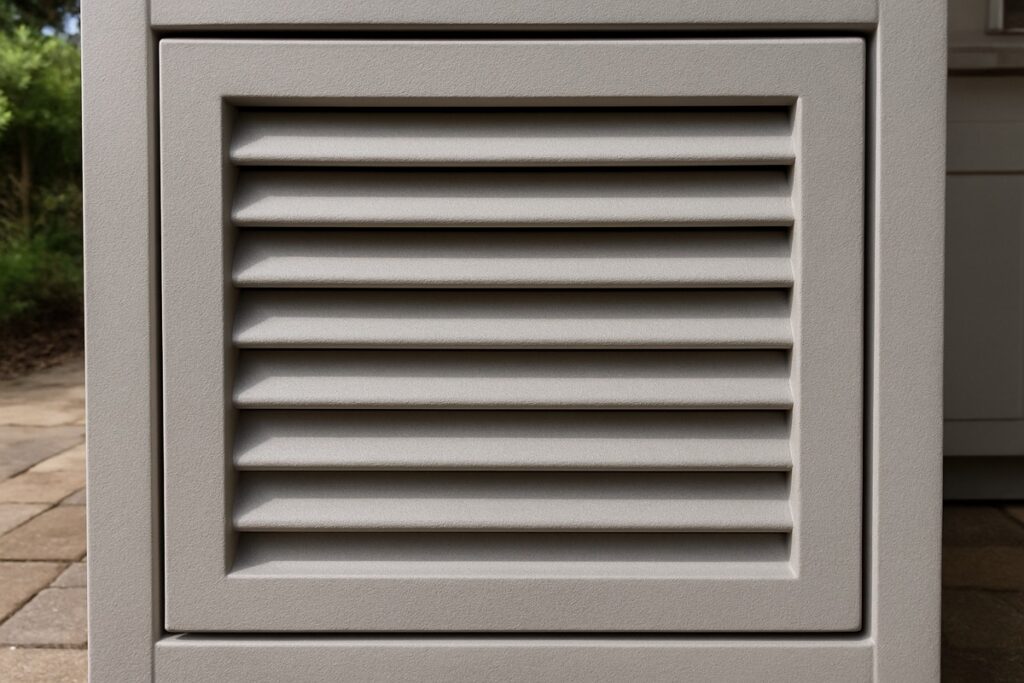
A slab door is a single flat panel with no frame or recess. It is the most modern-looking option, and it is also the easiest surface to wipe down after a cookout. Because there are no grooves to trap pollen, grease, or standing water, slab doors are a strong fit for uncovered patios that take direct sun and afternoon rain. In our marine-grade polymer, a slab door keeps its color and never needs refinishing, so the contemporary look you choose today still looks that way in five years. Slab fronts also pair naturally with concrete and porcelain countertops, which suits the clean, current style many newer Orlando homes are going for.
Shaker doors use a recessed center panel inside a square frame. They bring a timeless, slightly traditional feel that pairs well with stone countertops and transitional home styles common across Winter Park and Lake Mary. The one thing we point out to clients is that the recessed panel creates a shallow ledge where water and debris can settle. In polymer this is not a durability problem the way it would be with wood, but it does mean an extra few seconds of wiping after pollen season. For many homeowners the look is well worth it, and shaker doors remain one of our most requested styles because they feel familiar without looking dated.
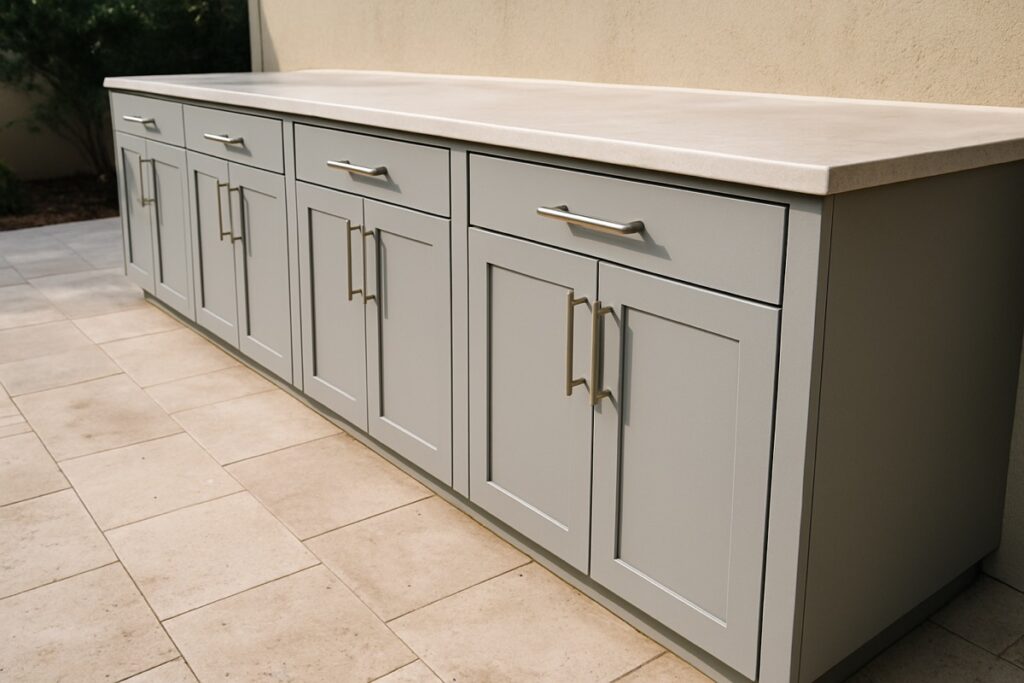
Louvered doors have angled horizontal slats that let air move through the cabinet. We do not recommend them everywhere, but they are the right call in specific spots, mainly around propane tanks, trash pull-outs, and any enclosure that benefits from airflow. Florida humidity rewards ventilation, and a louvered door on a trash cabinet keeps odors from building up in a closed box. The same airflow helps a cabinet that houses a tank stay dry and safe. We typically mix a few louvered doors into an otherwise slab or shaker run rather than using them across the whole kitchen, because too many slats start to read as utilitarian rather than finished.
Door style has a modest effect on price. Slab doors are generally the most economical because they are the simplest panel. Shaker doors cost a little more for the added frame detail, and louvered doors sit in a similar range. Across a whole kitchen the difference is rarely the deciding factor, which is good news because it means you can choose primarily on look and function. What ties everything together is consistency in the details that surround the doors. Keeping hardware finish and cabinet color the same across the run lets you mix door styles without the kitchen looking pieced together. A common combination we build is slab or shaker doors across the main cabinets with louvered doors reserved for the tank and trash, all in one color with matching stainless handles.
The most reliable way to choose is to think about each cabinet’s job before its look. A cabinet that stores dry goods or glassware wants a solid slab or shaker door that keeps weather out. A cabinet that holds a tank or trash wants a louvered door for airflow. A run that faces direct afternoon sun on an open patio leans toward easy-clean slab fronts. Once the function is settled, the style choice gets easier, and the result is a kitchen that looks designed rather than ordered from a catalog.
How a door looks at install is only half the question; what matters over time is how it holds up to our climate. Pollen arrives in heavy yellow waves through the spring, afternoon thunderstorms drive rain sideways across an open patio, and the sun sits high and harsh for most of the year. A flat slab door gives none of that anywhere to settle, which is why we point homeowners on fully exposed pool decks toward slab fronts. A shaker door’s recessed panel collects a thin layer of pollen along its bottom ledge, but because the surface is non-porous polymer rather than painted wood, that film rinses away in seconds. Louvered doors use the climate to their advantage, letting humid air move through a cabinet rather than sitting trapped inside it. None of the three styles fails outdoors; the difference is only in how often you reach for a cloth, and that is worth knowing before you choose.
Homeowners sometimes worry that combining door styles will make a kitchen look pieced together, and it can if the mix is random. The fix is to let one style lead and the others support it. Pick a primary door, slab or shaker, and use it across the cabinets that define the main run so the eye reads a single consistent surface. Then add louvered doors only where they do a job, on the trash pull-out and the tank cabinet, so the variation looks purposeful rather than accidental. The two rules that hold the whole thing together are color and hardware. Keep every door in the same color and every handle in the same finish, and your eye accepts the mix as one design even with three door profiles in the run. We have built kitchens across Orlando and Lake Mary that use all three styles in a single layout, and from a few feet away they read as one clean, intentional kitchen because the color and hardware never change.
Before any order is placed, we like homeowners to picture themselves cooking and walk the planned run in their mind, cabinet by cabinet. Stand at the grill and ask what you reach for first; that door should open easily and stay clean, which usually means a slab or shaker front. Move to where the tank or trash will live and confirm a louvered door belongs there for airflow. Notice which cabinets face the worst of the afternoon sun and rain, and lean those toward the easiest-clean fronts. This short mental walk catches mismatches that are invisible on a drawing but obvious the first week you cook, such as a recessed panel placed exactly where splatter lands hardest. Choosing door styles in the order you will actually use them is the simplest way to end up with a kitchen that feels designed around you.
Additional resource: If you want to see how cabinet door styles and finishes fit into a complete outdoor cooking space, This Old House’s outdoor kitchen guide offers a useful independent reference.
Do louvered doors let rain into the cabinet? The slats are angled to shed water, so wind-driven rain mostly runs off. We still avoid louvered doors on cabinets storing items that must stay completely dry, and reserve them for tanks, trash, and ventilation needs.
Which door style is easiest to maintain? Slab doors, because the flat surface has nothing to trap debris. All of our polymer doors wipe clean with mild soap and water, but slab fronts are the fastest after a cookout or pollen season.
Can I match a door style to my indoor kitchen? Often, yes. Shaker doors in particular help an outdoor kitchen feel connected to a transitional indoor space, while slab doors suit a modern interior.
Should every cabinet have the same door? Not necessarily. Mixing a primary style with louvered doors where ventilation matters is both practical and good-looking, as long as color and hardware stay consistent.
If you want help deciding which door styles fit your layout and how your space will weather the seasons, browse our project gallery or explore the cabinet lineup, then reach out through our contact page or call (407) 887-0035. We are glad to talk through the trade-offs for your Orlando outdoor kitchen.
Your cabinets are weatherproof. Make sure your countertop is too. Here are the surfaces that pair best with polymer outdoor cabinets in Florida.
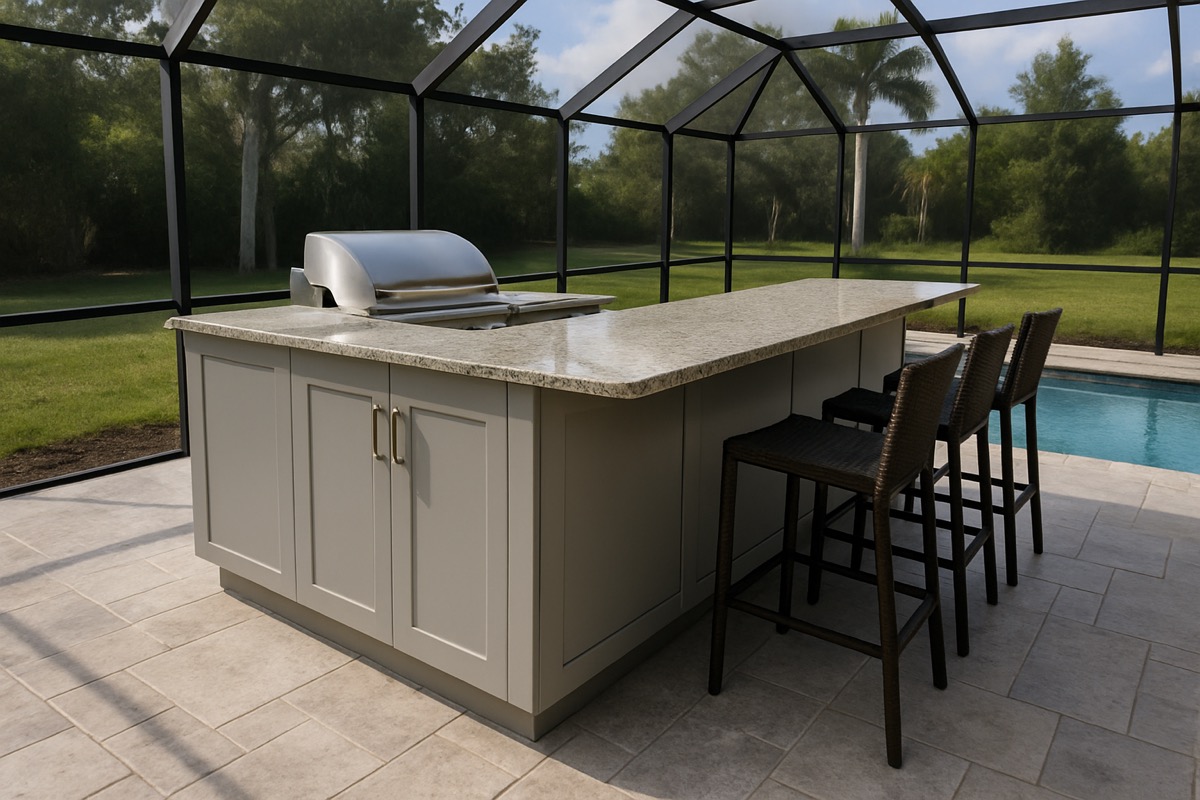
An island or a straight run against the wall? The right choice depends on your patio, your traffic, and how you entertain.
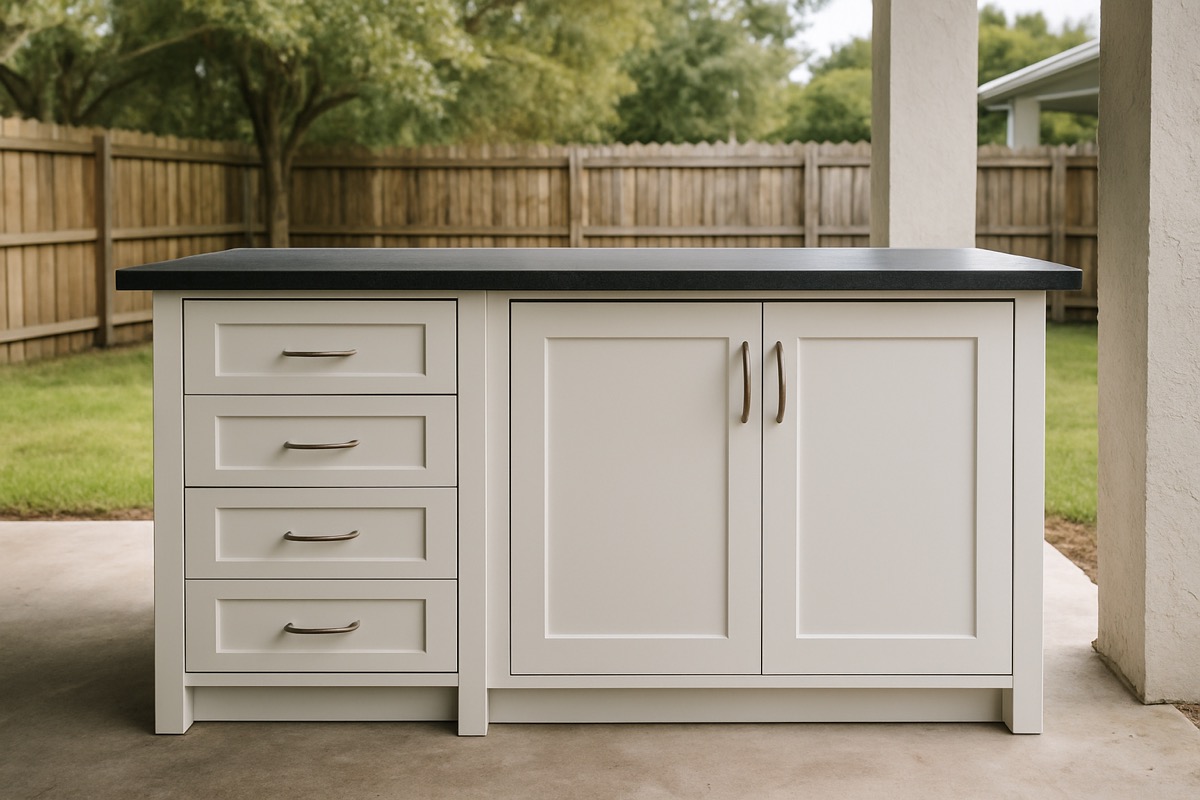
Drawers or doors? Both have a place in a well-planned outdoor kitchen. Here is how we help Orlando homeowners choose the right mix.