Outdoor Kitchen Cabinets
Planning Outdoor Kitchen Cabinets for Holiday Hosting in Central Florida
Outdoor kitchen cabinets holiday hosting guide for Central Florida: storage, serving counter space, and traffic flow tips.

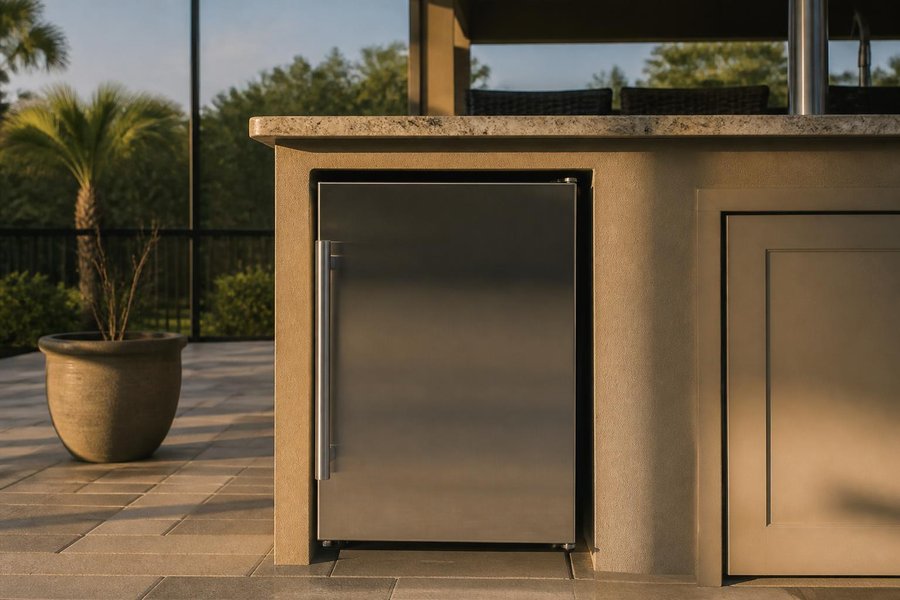
An outdoor refrigerator sounds like a simple add-on until you start planning the cabinet that has to hold it. Unlike a storage drawer or a trash pull-out, an outdoor-rated refrigerator is a running appliance with its own heat, moisture, and airflow needs — and the cabinet built around it has to accommodate all three, not just provide a box the right size.
For a Central Florida outdoor kitchen, where summer humidity and heat are part of daily reality, getting the refrigerator cabinet right is one of the more consequential appliance decisions in the whole layout, right alongside the grill itself.
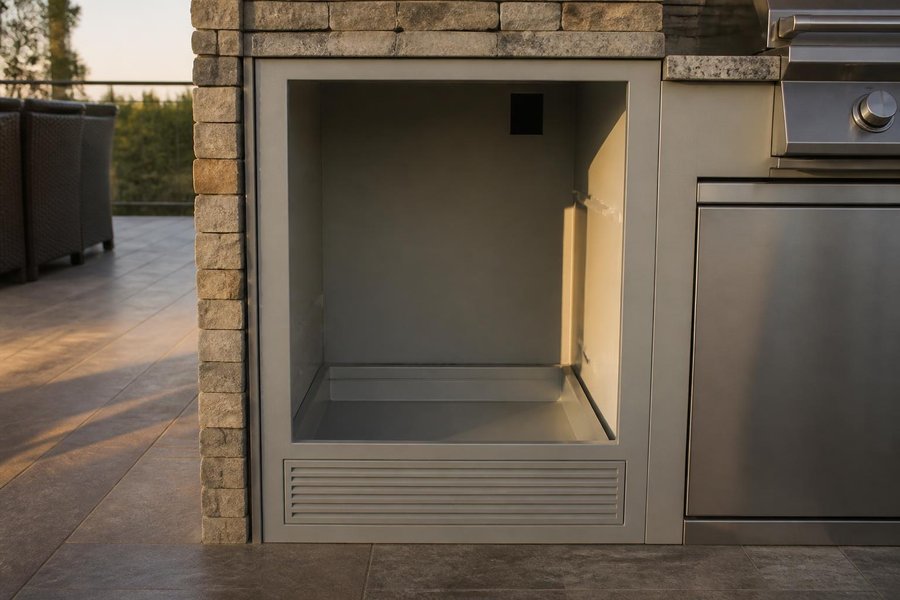
A standard indoor refrigerator is not built for outdoor installation, and swapping in an outdoor-rated unit changes what the surrounding cabinet needs to do. Outdoor refrigerators are compressor-driven appliances that generate heat and need a clear path for that heat to escape, rather than building up inside a sealed cabinet cavity.
That means the refrigerator cabinet is functionally closer to the grill cabinet than to a plain storage module: it needs a cutout sized to the specific unit, ventilation built into the cabinet design, and placement that keeps the compressor from working against trapped heat all day in the Florida sun.
Most outdoor-rated refrigerators are designed for a specific installation style — typically a front-ventilated, built-in configuration where the unit pulls in and exhausts air through the front grille rather than the back or sides. That front-ventilation design is exactly what makes built-in installation possible in the first place, since it does not depend on open space behind the unit the way a freestanding appliance would.
Even with a front-ventilated unit, the cabinet cavity still needs to match the appliance manufacturer’s specified clearances on all sides. Undersizing that cavity to save a little cabinet space is one of the more common planning mistakes, and it can shorten the working life of the compressor by forcing it to run against trapped heat.
Outdoor refrigerator cabinets are generally planned around common undercounter widths, but “common” does not mean universal. A few things worth confirming before the cabinet cutout is finalized:
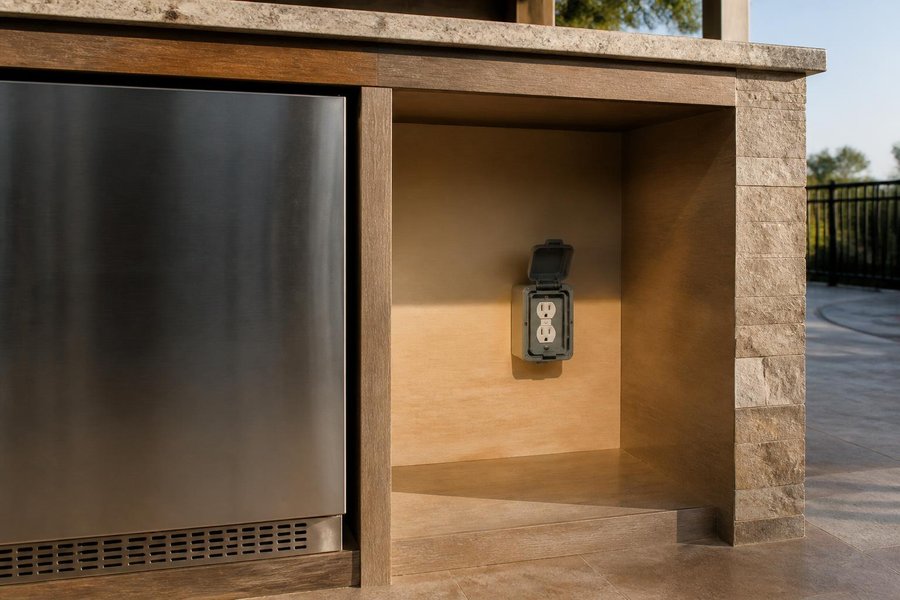
An outdoor refrigerator needs a nearby power source, almost always a dedicated, weather-protected outlet. Casual Kitchens Outdoor Cabinets designs and builds the cabinet with an appropriate access point for that connection, but the electrical circuit itself is work for your licensed electrician to install and inspect. Coordinating cabinet placement with your electrician early avoids a mismatch between where the cabinet ends up and where the outlet was planned. General guidance on appliance ventilation and efficient placement is also available through the U.S. Department of Energy’s appliance energy guidance, which is a useful general reference point for why ventilation clearance affects how hard a compressor has to work.
Placement affects performance as much as the cutout size does. A refrigerator cabinet positioned in direct, all-day sun or immediately beside a running grill has to work harder than one placed with at least some shade or separation from the heaviest heat source in the layout. A few placement habits tend to work well in a Central Florida kitchen:
A refrigerator cabinet does not stand alone in the design. It connects to several other layout decisions worth raising in the same planning conversation:
Bringing your intended refrigerator model, or at least its general size class, to your initial planning conversation gives Casual Kitchens Outdoor Cabinets the information needed to size and ventilate that cabinet correctly from the start.
No. Outdoor kitchens need an appliance specifically rated and ventilated for outdoor, front-ventilated built-in installation. A standard indoor refrigerator is not designed to handle outdoor heat and humidity or the front-ventilation airflow pattern a built-in cabinet provides.
Not necessarily the same number, but it is set the same way — by the specific appliance’s manufacturer clearances rather than by matching the surrounding storage cabinets.
A licensed electrician handles the circuit and outlet installation. Casual Kitchens Outdoor Cabinets designs the cabinet with the access point needed, and coordinates placement with your electrician’s work.
Yes. A unit placed in constant direct sun or right beside a hot grill has to work harder than one with some shade or separation, even with proper ventilation clearance.
The specific model, or at least its general size class and whether it uses a door or drawer front, so the cabinet cutout and ventilation can be planned around the actual unit rather than a generic estimate.
Beyond the appliance cutout itself, the cabinet walls immediately surrounding an outdoor refrigerator play a role in how well the unit performs over time. A cabinet built from a material that resists heat transfer helps keep the compressor from fighting ambient temperature on top of its normal cooling load, which is one more reason marine-grade polymer, rather than a thinner or less stable material, tends to be a better long-term match for a refrigerator enclosure in a Central Florida climate.
It is also worth confirming that the cabinet’s internal framing does not block the front-ventilation airflow path the appliance depends on. A cutout that is the right overall size but has framing members intruding into the ventilation zone can still cause the same heat-trapping problem a too-small cutout would.
Central Florida’s summer heat and humidity put more demand on an outdoor refrigerator’s compressor than a milder climate would, which makes proper ventilation clearance even more important here than it might be in a different region. During the hottest stretches of the year, a well-ventilated cabinet with some shade coverage can make a meaningful difference in how consistently the unit maintains temperature, compared with one squeezed into a tight, sun-exposed cutout.
Ready to plan your next outdoor kitchen cabinet decision? Contact Casual Kitchens Outdoor Cabinets at (407) 887-0035 or request a consultation through our contact page to talk through your layout, materials, and cabinet configuration options.
Outdoor kitchen cabinets holiday hosting guide for Central Florida: storage, serving counter space, and traffic flow tips.
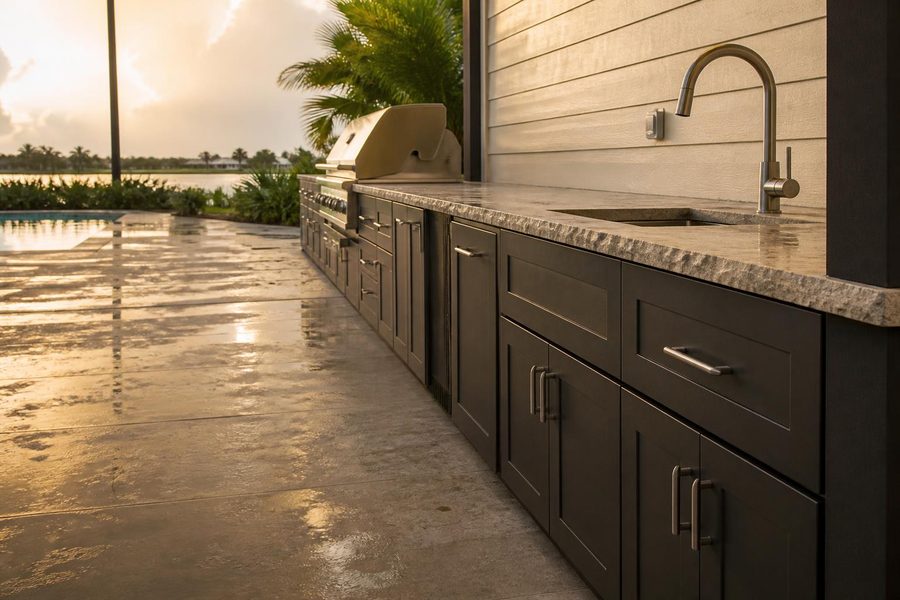
Outdoor kitchen cabinet drainage planning: learn how patio slope, raised bases, and runoff keep outdoor kitchen cabinets dry and long-lasting in Central Florida rain.
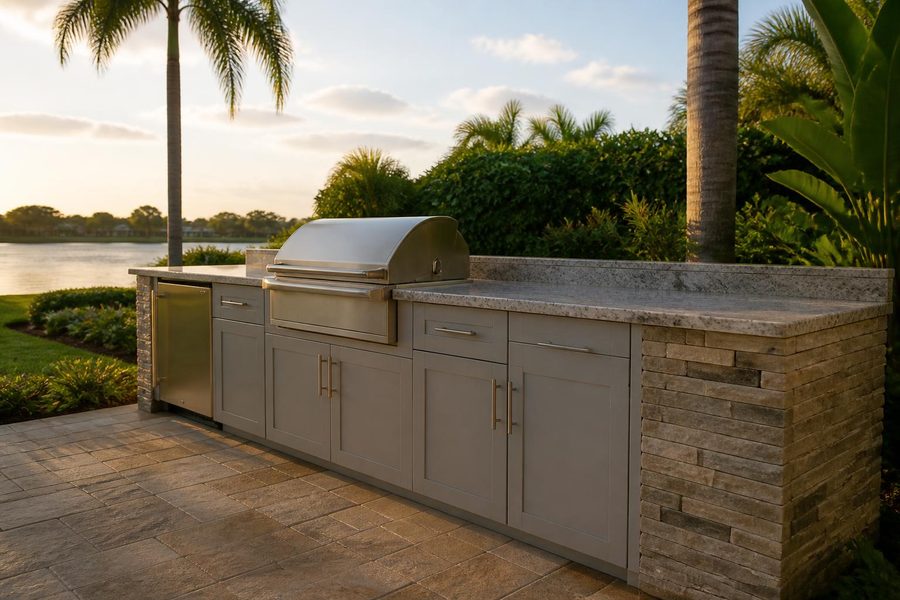
Outdoor kitchen cabinets Lake Mary homeowners can plan around: lanai, patio, and lakeside layouts with humidity and material tips.