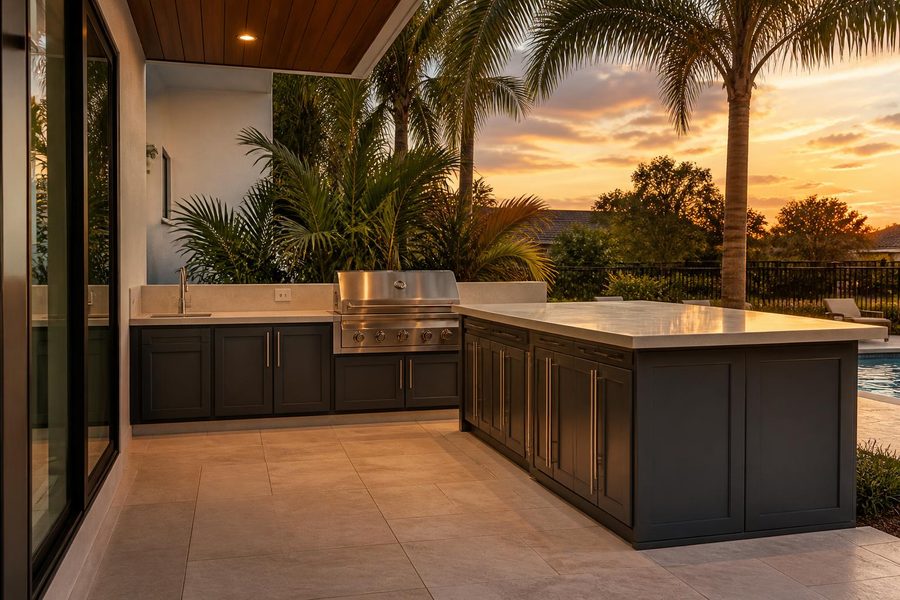
Outdoor Kitchen Cabinets
Planning Outdoor Kitchen Cabinets for Holiday Hosting in Central Florida
Outdoor kitchen cabinets holiday hosting guide for Central Florida: storage, serving counter space, and traffic flow tips.


A heavy stone slab — granite, quartz, or a similar dense material — can transform the look of an outdoor kitchen, but it also puts real weight on the cabinets underneath it. Before choosing a stone countertop for an Orlando outdoor kitchen, it is worth understanding what the cabinet structure needs to support that weight safely and what questions to bring to both your cabinet supplier and your countertop fabricator.
This is not a topic most homeowners think about until late in the planning process, but addressing it early can prevent costly changes after cabinets are already ordered or installed.

Outdoor cabinets carry more than a decorative role once a stone top is added — they become the structural base for a heavy, rigid material that does not flex the way lighter countertop options do. Granite and quartz slabs are dense and can weigh well over a dozen pounds per square foot before factoring in edge profiles or thickness upgrades.
That weight is distributed across the full cabinet run, but it concentrates most heavily at seams, overhangs, and any section without continuous cabinet support underneath. A cabinet system built for lighter-duty tops may not be designed with the same load path in mind, which is why it is worth confirming compatibility before committing to a specific stone.
Before finalizing a stone countertop over outdoor cabinets, a few structural questions are worth raising directly with your cabinet supplier:
Casual Kitchens Outdoor Cabinets can walk through these details for a specific layout, and it is worth bringing your countertop fabricator’s specifications to that conversation so both sides are working from the same weight and dimension expectations.

Marine-grade polymer cabinetry is built to withstand Orlando’s humidity, sun exposure, and rain without the swelling or rot that can affect other outdoor cabinet materials over time. That durability matters for stone-top compatibility too: a cabinet base that stays dimensionally stable in outdoor conditions is less likely to develop the gaps or shifts that can stress a countertop seam over the years.
Material stability also matters for the sealant and adhesive lines used where a stone top meets the cabinet edge. If the cabinet material expands, contracts, or absorbs moisture unevenly across seasons, those seams can be put under more stress than they would be indoors. A stable, moisture-resistant cabinet base gives the countertop installation a more predictable surface to bond to, which is one more reason material choice and structural planning tend to go hand in hand for outdoor stone-topped kitchens.
Because polymer cabinets do not absorb moisture the way some wood-based or lower-grade materials can, the support surface underneath a stone top tends to stay more consistent season to season, which is one reason polymer cabinetry has become a common pairing for stone-topped outdoor kitchens in this climate.
If you already have a layout in mind, reviewing finished examples in the outdoor cabinet gallery can show how stone tops sit over different cabinet configurations, and browsing available cabinet modules can help you understand which layouts are built with wider spans versus more frequent support points.
Stone countertops are typically templated after cabinets are set in place, which means the cabinet framing needs to be finalized and structurally ready before a fabricator can measure for the slab. Ordering cabinets without confirming stone compatibility first can lead to delays if reinforcement or a layout change is needed after the fact.
A practical sequence for most Orlando projects is: finalize the cabinet layout and confirm support specifications, install the cabinets, have the countertop fabricator template the space, and then schedule the stone installation. Keeping this order — rather than selecting the stone slab before the cabinet plan is locked — helps avoid mismatched expectations about overhangs, seams, and support. If the cabinet layout itself is still taking shape, start with our overview of outdoor kitchen cabinets for Orlando homes.

Because a stone countertop project usually involves two separate vendors — the cabinet supplier and the stone fabricator — miscommunication between the two is one of the most common sources of delay. A short list of shared questions can help keep both sides aligned:
Bringing these questions to your initial cabinet consultation, rather than waiting until the countertop template appointment, gives Casual Kitchens Outdoor Cabinets and your fabricator time to coordinate before anything is ordered or cut.
Not automatically. Cabinet framing needs continuous, level support across the run and clear guidance on overhang limits before it is paired with a heavy stone top. Confirming these details with your cabinet supplier before ordering stone helps avoid structural surprises later.
Overhang limits vary by stone type, thickness, and cabinet construction, so this should be confirmed directly with your cabinet supplier and countertop fabricator for your specific materials. Larger overhangs generally need additional support such as corbels or brackets.
Marine-grade polymer cabinets are built to stay dimensionally stable outdoors, which supports a consistent base under a stone top over time. Specific reinforcement needs still depend on the countertop weight, span, and layout, so it is worth reviewing your plan with Casual Kitchens Outdoor Cabinets before finalizing stone selection.
Finalize the cabinet layout and confirm structural support details first, since the countertop fabricator typically templates the stone after cabinets are installed. Selecting stone before the cabinet plan is locked can lead to mismatched overhang or seam expectations.
Ready to plan your next outdoor kitchen cabinet decision? Contact Casual Kitchens Outdoor Cabinets at (407) 887-0035 or request a consultation through our contact page to talk through your layout, materials, and cabinet configuration options.
Outdoor kitchen cabinets holiday hosting guide for Central Florida: storage, serving counter space, and traffic flow tips.
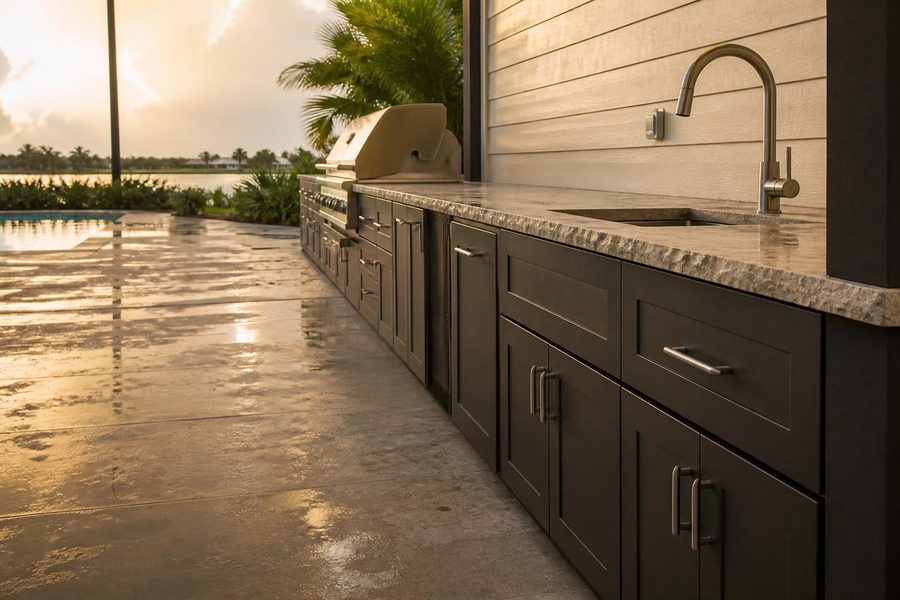
Outdoor kitchen cabinet drainage planning: learn how patio slope, raised bases, and runoff keep outdoor kitchen cabinets dry and long-lasting in Central Florida rain.
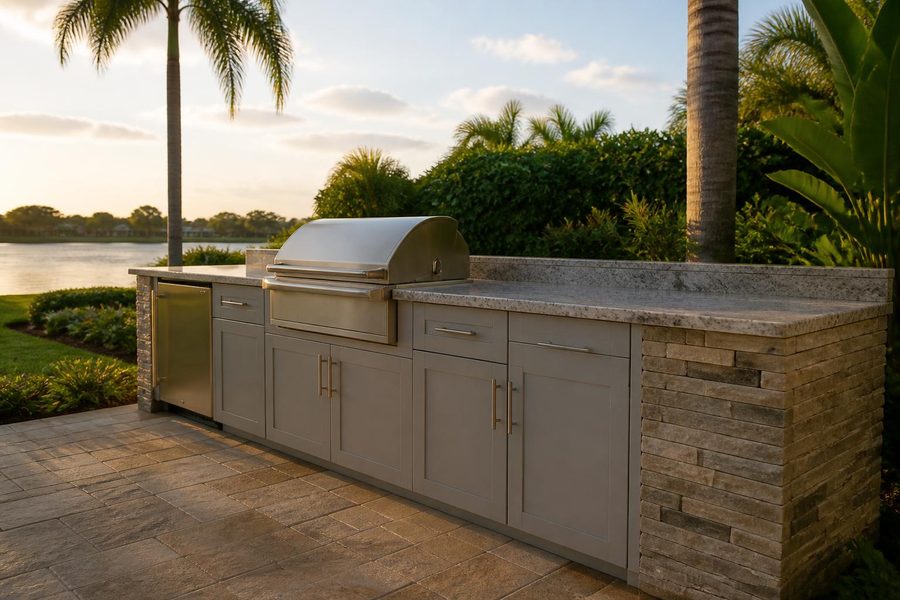
Outdoor kitchen cabinets Lake Mary homeowners can plan around: lanai, patio, and lakeside layouts with humidity and material tips.