Central Florida is a wonderful place to cook outside, and it is also a place where ants, roaches, lizards, and the occasional mouse treat any sheltered space as an invitation. A cabinet that stays closed most of the week, sits near food, and gets damp after every afternoon storm is exactly the kind of spot they look for.
This guide covers practical ways to keep pests out of outdoor kitchen cabinets, from how you plan the layout to how you store things and what you do in a routine cleaning. None of it is complicated, and most of it costs nothing once the cabinets are in place.
Why Outdoor Cabinets Attract Pests in the First Place
Pests are after three things: food, water, and shelter. An outdoor kitchen can quietly offer all three. Crumbs and grease collect near the grill, condensation and rain keep surfaces damp, and a closed cabinet is dark and undisturbed. Add nearby mulch beds, hedges, or a lanai screen, and the route from the yard to your cabinet is short.
The good news is that each of those three things is something you can reduce. You cannot make a Florida yard bug-free, but you can make your cabinets a much less interesting place to settle.
Start With the Layout, Not the Spray
Pest control often begins on paper. A few layout choices make a real difference:
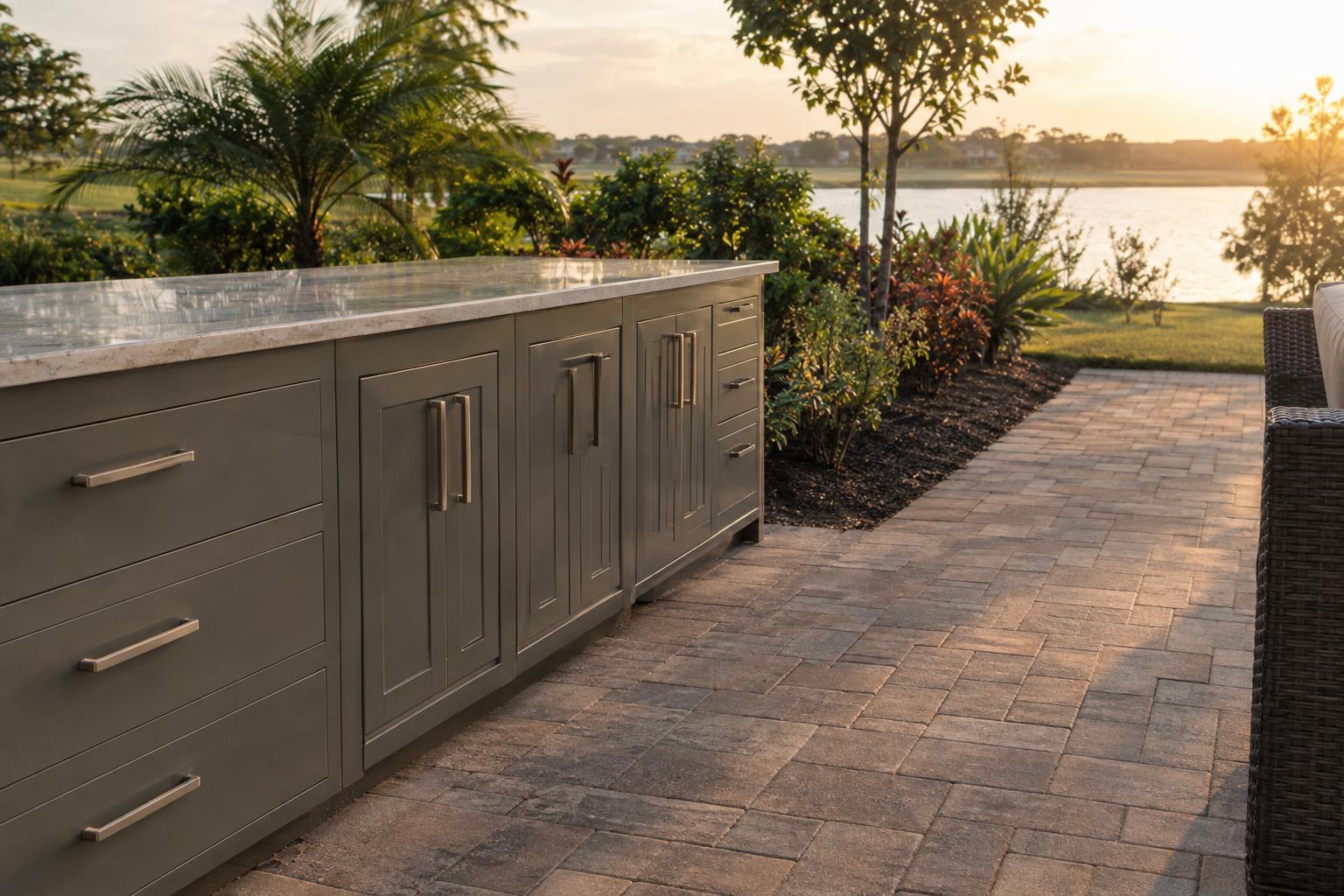
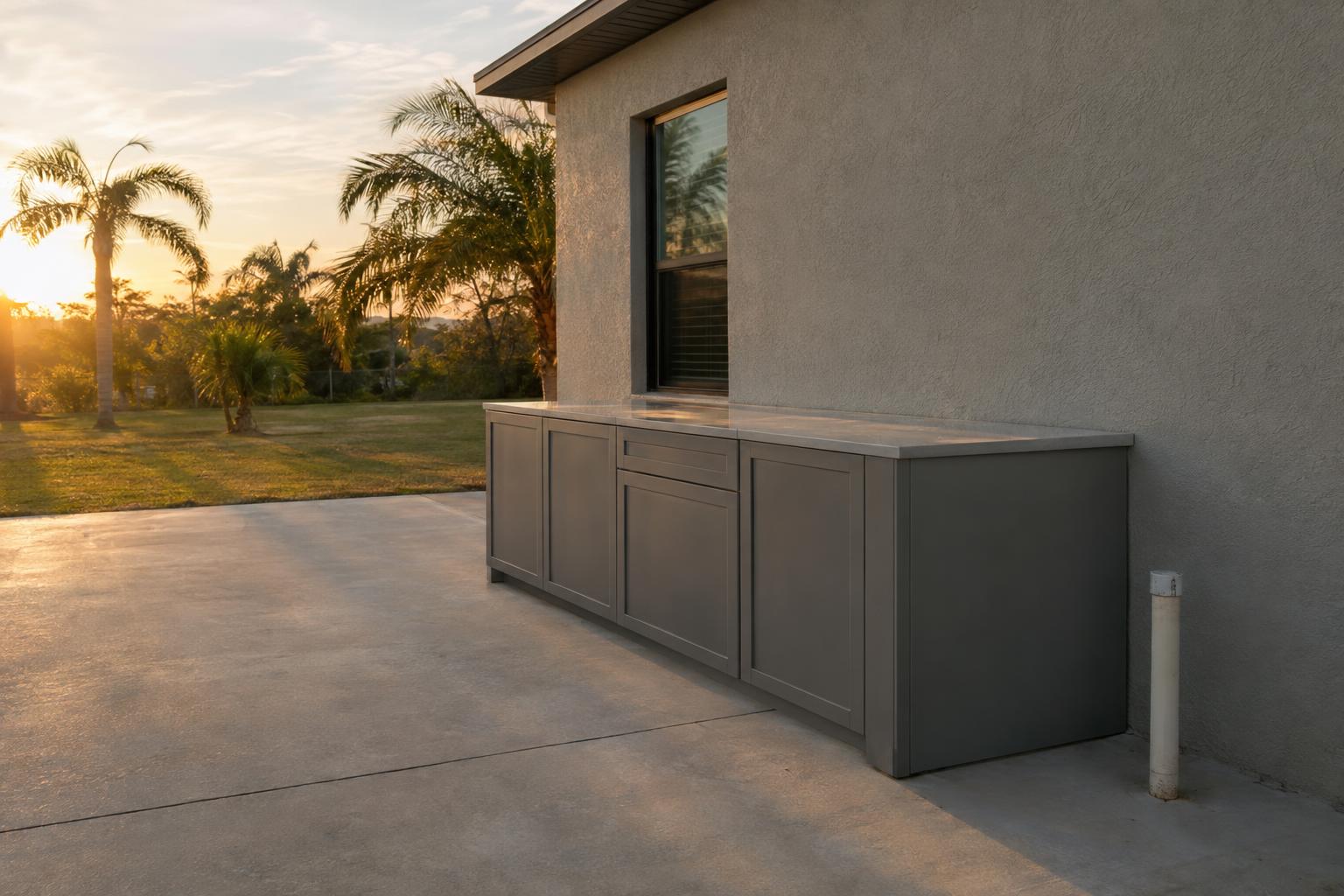
Keep cabinets off planting beds. Leave a strip of hardscape between the cabinet run and any mulch, shrubs, or turf, so insects have to cross open, dry ground to reach the cabinets.
Plan for airflow and drying. Surfaces that dry quickly after rain are less attractive. Avoid tucking a cabinet run into a tight corner where moisture lingers. Our post on drainage and water runoff around outdoor kitchen cabinets explains how to keep water moving away from the base.
Think about where food lives. Storage for dry goods, pet food, or anything edible belongs in a spot that is easy to check and easy to clean, not at the back of the least-used cabinet.
Keep the trash cabinet convenient. A trash cabinet that is awkward to use becomes a cabinet where bags sit open. We cover placement in our guide to trash cabinet placement for outdoor kitchens.
A Cabinet Surface That Wipes Clean Helps
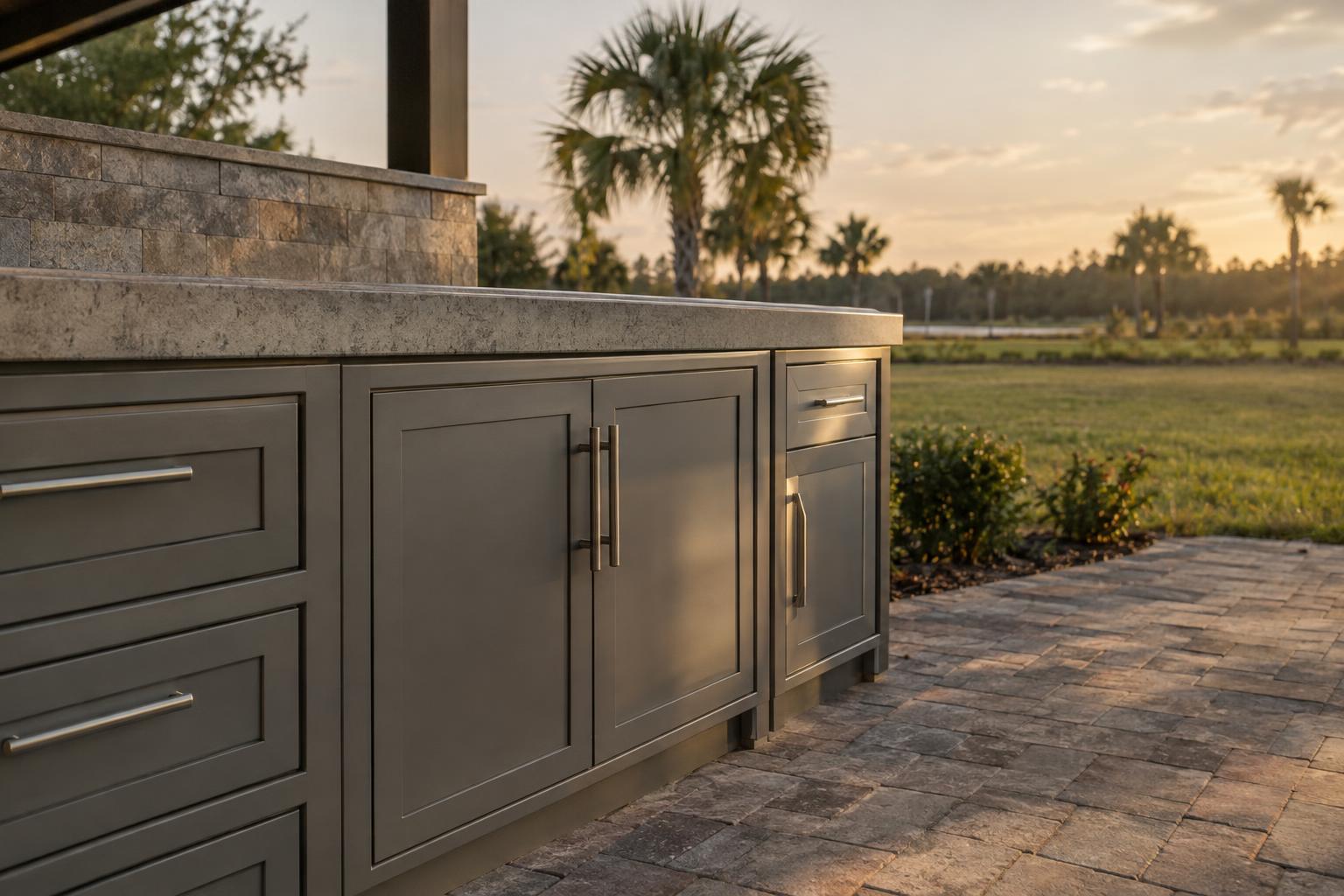
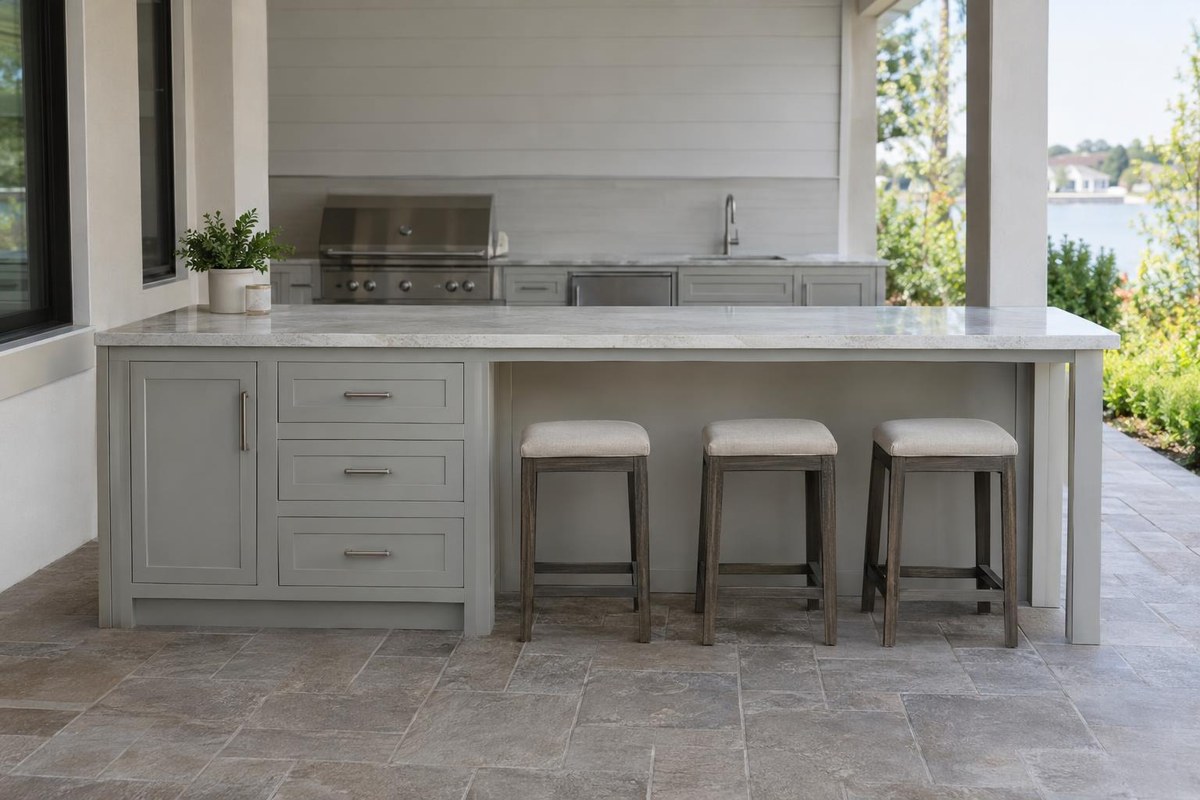
Casual Kitchens Outdoor Cabinets builds with marine-grade polymer, a material designed for wet, humid, sun-exposed conditions. A quick wipe with mild soap and water handles most of what lands on them. That makes the routine cleaning that discourages pests simple to keep up. Our guide to caring for outdoor kitchen cabinets in Florida humidity lists the basics.
Keep in mind that no cabinet material, ours or anyone else’s, is a guarantee against pests. A determined insect can use any gap, and the habits below matter as much as the cabinet itself.
Store Smart: Sealed Containers Beat Open Shelves
What you put inside the cabinet matters more than most people expect. A few habits cover most situations:
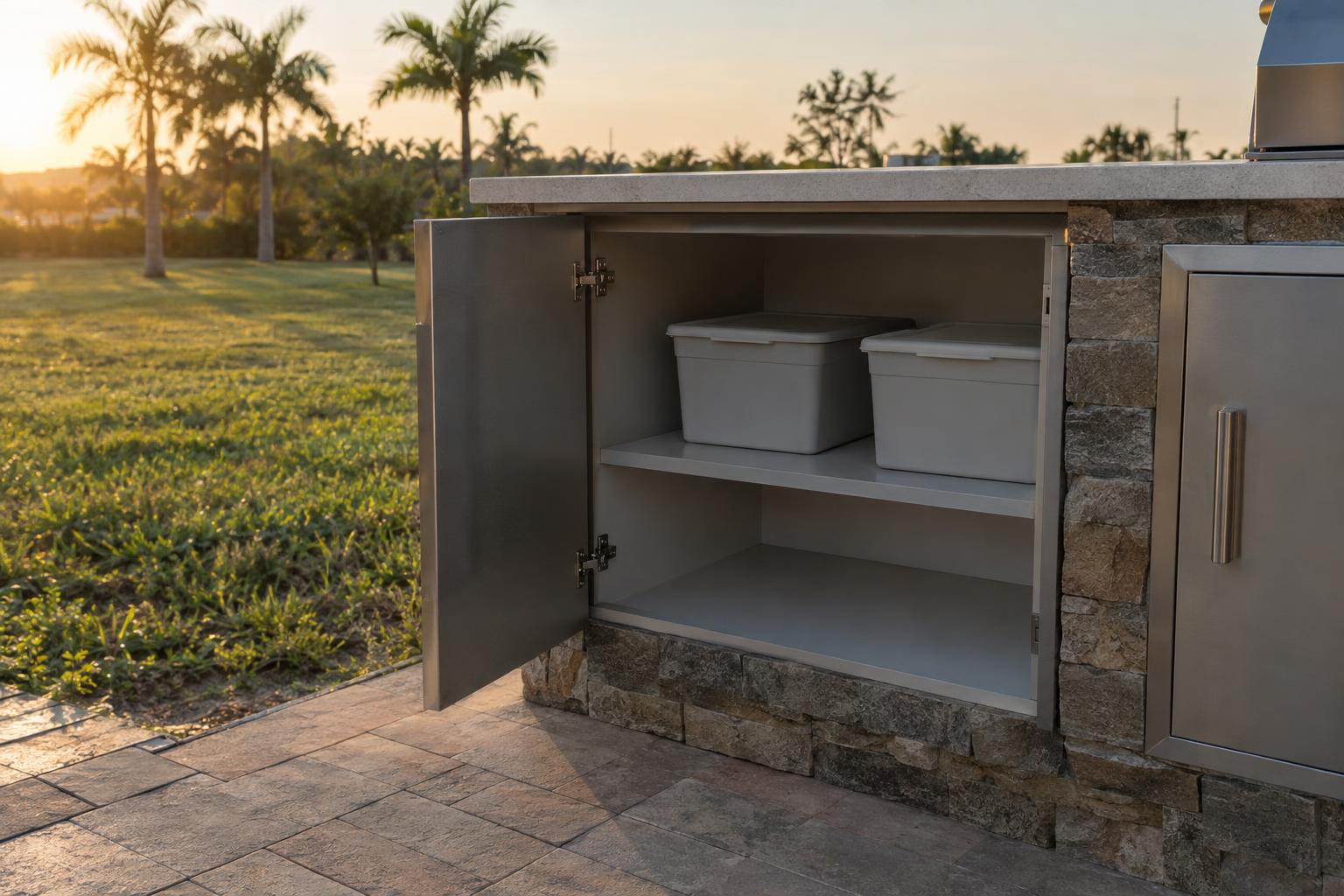
Use lidded containers. Hard plastic or metal bins with snug lids keep seasonings, charcoal accessories, pet food, and snacks out of reach. Cardboard boxes and open paper bags invite trouble and also soak up humidity.
Do not store food you would not want to find an ant in. If it is not sealed and does not need to be outside, keep it in the house.
Keep grease and drippings away from storage. Wipe down grill tools before they go back in the drawer. Our post on grill tool and utensil storage shows ways to keep everything organized and clean.
Give the interior some air. A cabinet packed to the back wall holds moisture. Leave a little space so you can see and reach every corner.
If you are still deciding what belongs where, our overview of outdoor kitchen cabinet storage ideas helps you sort daily-use items from seasonal ones.
A Simple Monthly Check
A five-minute walk around the outdoor kitchen once a month catches most problems early. Open each door and drawer, shine a flashlight along the bottom and back corners, and look for droppings, nesting material, trails of ants, or damp spots. Wipe the interior, shake out anything that has been sitting, and check that the doors still close fully. Small problems are easy to fix when you find them in the first week.
It also helps to look at the surroundings. Trim vegetation that touches the cabinet run, clear leaf litter from the base, and make sure irrigation spray is not hitting the cabinets, which keeps the area damp. Keeping hardware in good shape matters too, because a door that no longer closes tightly leaves a gap. See our post on hardware choices that resist humidity and salt air for what to look for.
Handle Trash and Grease Like You Mean It
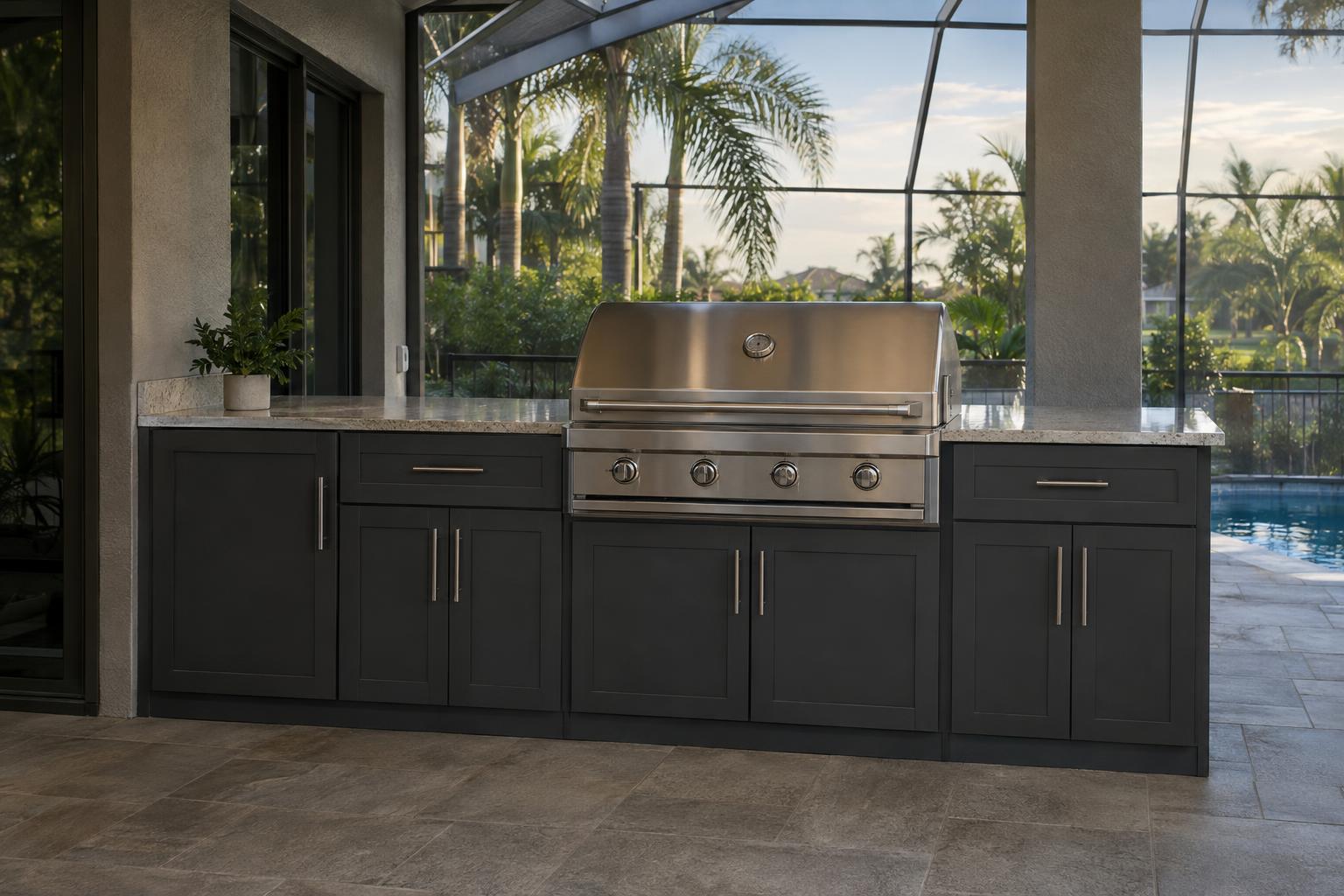
The single biggest pest magnet in most outdoor kitchens is the trash. Use a bag that closes, empty it after any gathering rather than leaving it overnight, and rinse the bin now and then. Grease is the second biggest, since a grill’s drip and splatter zone attracts ants and roaches fast. A regular wipe-down of the counter and the front of the cabinets near the grill removes the film before it becomes a food source.
Know When to Call a Professional
If you see a steady trail of ants, signs of rodents, or any activity you cannot get under control, bring in a licensed pest control company. University of Florida IFAS Extension publishes research-based guidance on ants and other household pests that explains how common Florida species behave and what to expect. Casual Kitchens Outdoor Cabinets makes the cabinetry; pest treatment itself is work for the appropriate licensed professional.
Putting It Together
To keep pests out of outdoor kitchen cabinets, think in layers: a layout that stays dry and away from planting beds, a surface that wipes clean, sealed containers inside, and a short monthly check. That is a modest routine for a space you use for years. If you are planning new cabinets and want the layout to support easy cleaning from day one, you can also browse the project gallery to see how finished runs are arranged.
Frequently Asked Questions
Will outdoor kitchen cabinets keep bugs out completely?
No cabinet can promise that. Good layout, clean storage habits, and doors that close fully greatly reduce the chance of pests settling in, but regular checks are still part of owning an outdoor kitchen in Florida.
What is the best way to store food in outdoor kitchen cabinets?
Use hard containers with tight lids, and keep only items that need to be outside. Anything perishable, open, or attractive to insects is better stored indoors.
How often should I clean the inside of my outdoor kitchen cabinets?
A quick wipe-down and visual check about once a month is a good habit, with extra attention after large gatherings or heavy rain.
Does marine-grade polymer attract fewer pests?
Marine-grade polymer is designed for wet and humid conditions and wipes clean easily, which makes it simple to keep tidy. Cleanliness and good storage habits are what actually discourage pests.
Who should I call if I find rodents or a heavy ant problem?
A licensed pest control professional. Casual Kitchens Outdoor Cabinets handles the cabinetry itself and can talk through layout changes that make cleaning easier.
Our team builds outdoor kitchen cabinet plans for Orlando homeowners — from layout direction and storage sequencing to finish coordination and appliance-ready configurations.
Planned or own a kitchen with WeatherStrong outdoor cabinets? Here is what is changing in the HDPE cabinet market and how Casual Kitchens in Orlando can help, starting with a free design consultation.